(2)
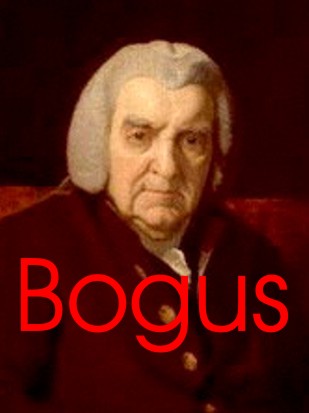
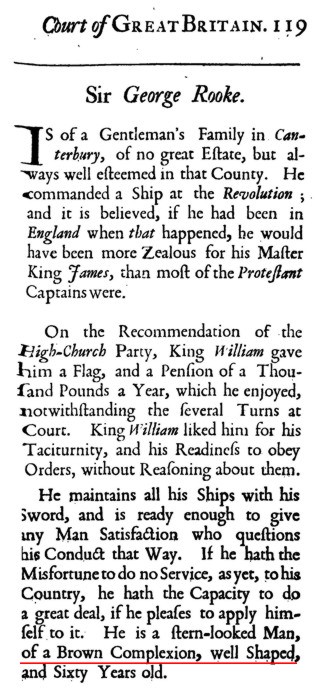
After several hundred years of falsified racist history: As we have all been taught; there were no Blacks in Europe, and those that were there, were African Slaves, Servants, or African Charity cases. Black research, like our own - has forced the lying European Albinos to make some grudging minor admissions like this... |
|
Click here for the News Story.
This Wiki of John Macky is excerpted from:
Dictionary of National Biography, 1885-1900, Volume 35
Macky, John
by Thomas Finlayson Henderson
MACKY, JOHN (d. 1726), was a government agent or spy, author of ‘Memoirs of Secret Services,’ was a Scotsman of good education, but of his parentage or birth nothing is known. According to his own account he ‘came early into the measures of the revolution,’ and being, on the return of King James from Ireland to France, sent to Paris to find out the further purposes of the Jacobites, he discovered that the French government intended to send an expedition against England in 1692. He arrived in London with the information before James reached his army encamped at La Hogue, and thus gave the government ample time for preparations against it. On the return of King William to England in October 1693, he was appointed inspector of the coast from Harwich to Dover in order to prevent treasonable correspondence between the two countries by passengers or letters. He discovered the proposed descent on England in 1696 in connection with the assassination plot of Sir George Barclay [q. v.]; and after its disclosure published ‘A View of the Court of St. Germains from the year 1690 to 1695, with an Account of the Entertainment Protestants meet with there, directed to the malcontent Protestants of England,’ 1696. Of this pamphlet he states that no fewer than thirty thousand copies were sold. After the peace of Ryswick, 20 Sept. 1697, he had the direction of the packet-boats from Dover to France and Flanders, and he states that during the negotiations connected with the Partition treaty in 1698 he had the charge of transmitting all the private expresses that passed between King William and Lord Portland.
The packet-boat service was discontinued after the death of King William in 1702, and Macky went to look after an estate possessed by him and others in the island of Zante, in the dominion of Venice. After the battle of Ramillies in May 1706 he had the direction of the packet-boats to Ostend, with instructions to watch narrowly all naval preparations at Ostend and other sea-coast towns; and in 1708 he discovered the preparations for an armament at Dunkirk. Subsequently he came under the suspicion of the government and was thrown into prison, where he remained till the accession of George I. On obtaining his liberty he endeavoured at his own expense to establish a service of packetboats to Dublin, but the undertaking involved him in heavy expenses, and was soon dropped. Ultimately he went abroad, and he died at Rotterdam in 1726.
He is the author of a somewhat important contribution to contemporary history: 'Memoirs of the Secret Services of John Macky, Esq., during the Reign of King William, Queen Anne, and King George I. Including also the true Secret History of the Rise, Promotions, &c., of the English and Scots Nobility; Officers, Civil, Military, Naval, and other Persons of distinction from the Revolution. In their respective Characters at large: drawn up by Mr. Macky pursuant to the direction of Her Royal Highness the Princess Sophia. Published from his original Manuscript, as attested by his son. Spring Macky, Esq.,' London, 1733. An edition in French, translated by 'A. R.,' was published at the Hague in the same year. The chief value of the 'Memoirs' consists in its descriptions of the leading personages of the period, which evidence both keen powers of observation and great impartiality of judgment. Swift has appended notes, generally of an acrid character, to many of the descriptions. Macky was also the author of 'Journey through England,' 1714; 2nd edition, 1722, with additional volume; 3rd edition, 1723, with a third volume; reprinted, with large additions, 1724 and 1732; 'Journey through Scotland,' 1723; and 'Journey through the Austrian Netherlands,' 1725.
 |
 |
 |
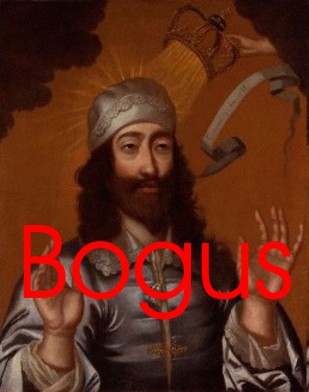
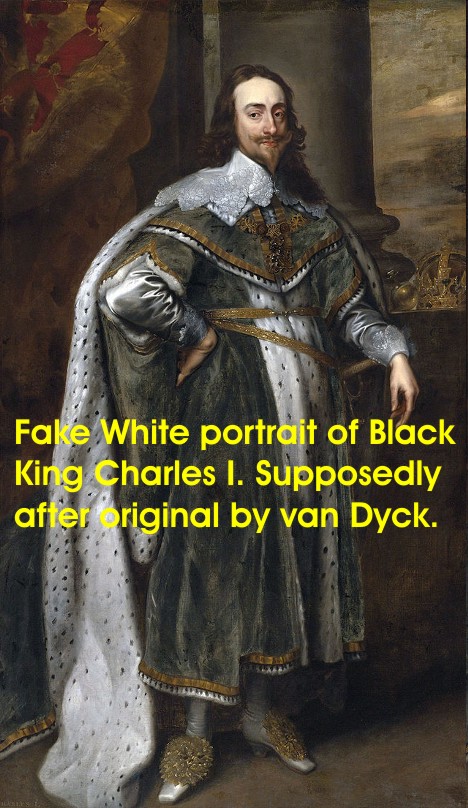
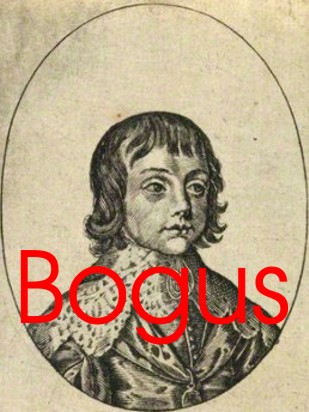
Charles I (1600–1649) was King of the three kingdoms of England, Scotland, and Ireland from 27 March 1625 until his execution in 1649.
Charles was the second son of King James VI of Scotland, but after his father inherited the English throne in 1603, he moved to England, where he spent much of the rest of his life. He became heir apparent to the English, Irish and Scottish thrones on the death of his elder brother in 1612. An unsuccessful and unpopular attempt to marry him to a Spanish Habsburg princess culminated in an eight-month visit to Spain in 1623 that demonstrated the futility of the marriage negotiations. Two years later he married the Bourbon princess Henrietta Maria of France instead.
After his succession, Charles quarreled with the Parliament of England, which sought to curb his royal prerogative. Charles believed in the divine right of kings and thought he could govern according to his own conscience. Many of his subjects opposed his policies, in particular the levying of taxes without parliamentary consent, and perceived his actions as those of a tyrannical absolute monarch. His religious policies, coupled with his marriage to a Roman Catholic, generated the antipathy and mistrust of reformed groups such as the Puritans and Calvinists, who thought his views too Catholic. He supported high church ecclesiastics, such as Richard Montagu and William Laud, and failed to successfully aid Protestant forces during the Thirty Years' War. His attempts to force the Church of Scotland to adopt high Anglican practices led to the Bishops' Wars, strengthened the position of the English and Scottish parliaments and helped precipitate his own downfall.
From 1642, Charles fought the armies of the English and Scottish parliaments in the English Civil War. After his defeat in 1645, he surrendered to a Scottish force that eventually handed him over to the English Parliament. Charles refused to accept his captors' demands for a constitutional monarchy, and temporarily escaped captivity in November 1647. Re-imprisoned on the Isle of Wight, Charles forged an alliance with Scotland, but by the end of 1648 Oliver Cromwell's New Model Army had consolidated its control over England. Charles was tried, convicted, and executed for high treason in January 1649. The monarchy was abolished and a republic called the Commonwealth of England was declared. In 1660, the English Interregnum ended when the monarchy was restored to Charles's son, Charles II.
 |
 |
 |
 |
 |
 |
 |
 |
 |
 |
 |
 |
 |
 |
 |
 |
 |
 |
 |
 |
 |
 |
 |
 |
 |
 |
 |
 |
 |
 |
 |
 |
 |
 |
 |
 |
 |
 |
We Black people, and truth seeking people of all colors, must of course always have our wits about us when considering information offered by the Albino people. But even the most cautious among us, often find themselves totally at the mercy of the Albino people to tell them "what is what". Take the case of the often used facial complexion term: "SANGUINE". WEBSTERS defines it as: 1) bloodred, 2) consisting of or relating to blood, 3) bloodthirsty, 4) of the complexion "Ruddy." Following those definitions, Ruddy and Sanguine would seem to be terms used to describe White people.
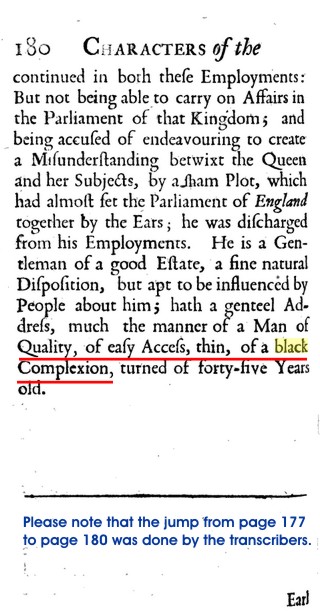
But Macky describes John, Duke of Newcastle (Page 35), as "He is a Black, Ruddy complexioned Man". And he describes the Earl of Middleton (page 238) as "He is a Black man of middle stature with a Sanguine complexion". Obviously then, we cannot even trust the Albino people to tell us what certain words mean.
But one thing that we can depend upon the Albino people for, is the most outrageous lies possible. It has come to our attention that in order to explain away this material, some Albino people have taken to saying things like this: “In old Britain everyone who was tanned was called, Black, swarthy, dark, or brown.” How sad that they fell the need to lower themselves to such depths. But that particular lie is easily debunked by this article in the on-line U.K. paper "The Telegraph".
By Richard Alleyne, Science Correspondent - 6:00PM GMT 16 Dec 2010
Experts have overturned decades of advice by urging people to go out in the midday sun without sunblock – because the dangers of missing out on Vitamin D can outweigh the risk of cancer. After years of ordering us to cover up to avoid skin cancer, a leading group of charities are now telling us to go out in the midday sun unprotected – at least for the first few minutes. The change of heart comes as it emerges a large proportion of Britons are at risk from vitamin D deficiency which can lead to a host of health problems.
Paranoia about sun exposure has become so great among some parents that doctors are even seeing a return of rickets in children – the bone disease that it was thought died out 80 years ago. The "definitive statement" by seven leading health groups and charities, including Cancer Research UK, the National Osteoporosis Society and Multiple Sclerosis Society, is designed to clarify conflicting messages.
It concluded that surrendering your body to the sun for 10 minutes should take place at midday during the summer months because that is when the sun is strong enough to trigger the body into making vitamin D. For the whole of winter, and before 10am and after 4pm in summer, the rays are too weak in the UK, to stimulate vitamin D synthesis in the skin.
From that article we are able to debunk two Albino lies: the first is the old Albino lie that their skin is the result of an evolutionary change which allows them to better absorb the Suns UV Rays for vitamin D production. If that were true they wouldn’t be getting the disease “Rickets”.
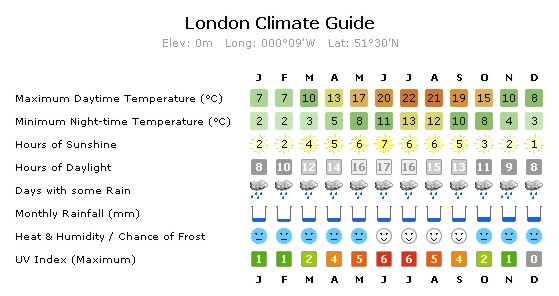
And also, you can clearly see from the article that it would be next to “IMPOSSIBLE” for a White Britain to be deeply tanned.
(AS a reminder, the max. UV strength is 11 or 12 depending on the scale used. As you can see below, Britain barely reaches half way).
 |
 |
 |
 |
 |
 |
 |
 |
 |
 |
 |
 |
For those who may have stumbled onto this page via a web search, and wonder as to its meaning and context, here is your answer.
Those who research history know that the “Thirty Years” Wars in continental Europe (1618–1648), and the English “Civil Wars” (1642–1651) were really “Race Wars” having to do with removing Black rule and hegemony in Europe. Though of course, the Albinos did not frame it like that at the time, (Blacks were naively on both sides). But regardless of what the Albinos called it, the ultimate result was the fall of the Black “Holy Roman Empire (962–1806)” in Europe. And the fall of the last purely Black dynasty in Britain, the House of Stuart (the Jacobites).
Those Blacks that were not killed were expelled, and scattered throughout the Americas: mostly as Slaves, but sometimes as Indentures, and mostly in the Caribbean and North America. Since that time, the Albino people have busied themselves erasing all evidences of their murderous atrocities, and all evidences of Blacks in Europe, and the entire world for that matter. While at the same time, creating FAKE paintings, engravings, statues, etc. of Albinos, which they falsely identify as those now erased Black people. Note: FAKE White paintings of probably all of the Black British People revealed here, can be found at the on-line site of the National Portrait Gallery of Britain. Click here for link to the National Portrait Gallery of Britain
|
Biographies in these pages are taken from:
http://onlinebooks.library.upenn.edu/webbin/metabook?id=dnb
AND
http://www.archive.org/search.php?query=The%20Scottish%20nation%20or%20the%20surnames
GLOSSERYDuke (male) or duchess (female) is a member of the nobility, historically of highest rank below the monarch, and historically controlling a duchy. Marquess or marquis is a nobleman of hereditary rank. In the British Isles the title ranks below a Duke and above an Earl. Earl is a member of the nobility. The title is Anglo-Saxon, akin to the Scandinavian form jarl, and meant "chieftain", particularly a chieftain set to rule a territory in a king's stead. In Scandinavia, it became obsolete in the Middle Ages and was replaced with duke. In later medieval Britain, it became the equivalent of the continental count (in England in the earlier period, it was more akin to duke; in Scotland it assimilated the concept of mormaer). Count (male) or countess (female) is an aristocratic nobleman in European countries. The British equivalent is an Earl (whose wife is a "countess", for lack of an Anglo-Saxon term). Chancellor is the title of various official positions in the governments of many nations. Baron is a title of nobility. The word baron comes from Old French baron, itself from Old High German and Latin (liber) baro meaning "(free) man, (free) warrior"; it merged with cognate Old English beorn meaning "nobleman". The mediaeval Latin word baro, baronis, was used originally to denote a tenant-in-chief of the early Norman kings, which class developed into feudal barons who held their lands from the king by the feudal tenure per baroniam and were entitled to attend parliament. Lord is a deferential appellation, in the majority of cases non-official, meaning in general "one with power and authority, a master or ruler". The king is frequently referred to in mediaeval documents as "The Lord King". The official peerage titles of Baron, Viscount and Earl may be replaced with the unofficial generic appellation of "Lord", either in written or spoken use. Sir: as a knight, which was a member of a class of lower nobility in the High Middle Ages. SWARTHY - Of a dark color, complexion; Synonyms: black, brunet (or brunette), swart, dark. SANGUINE - Bloodred: consisting of or relating to blood. Sanguinary of the complexion: Ruddy. RUDDY - (Also called florid) is a reddish crimson colour, closer to red than to rose. |
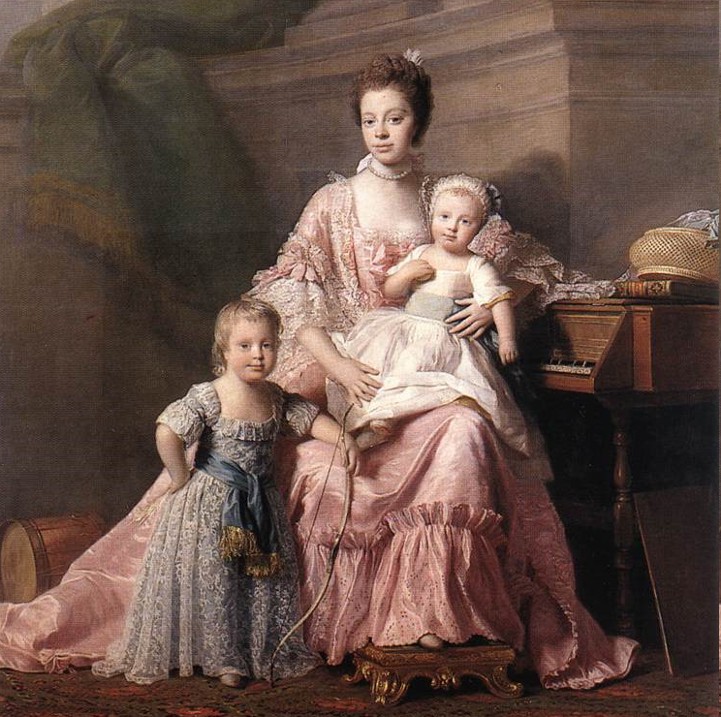 |
(Uncorrected from the scanned page). CHARLOTTE SOPHIA (1744-1818), Queen of George III, king of England, was Wie youngest daughter of Charles Lewis, brother of Frederic, third duke of Mecklen-burg-Strelitz. When a young girl she was so distressed ac the ravages of tne IVussian troops on a relative's territory, that she wrote a letter to their king begbing him to restrain them. This letter found its way to England, and is said to have done something to direct the attention of the English court to her as a suitable consort for George (Mahon, History of EngUiJid, iv. 331, 1846). The inquiries made resulted in a formal proposal, which was accepted, and the princess set off for England. The voyage from Cuxhaven to Harwich took ten days, for the ship was delayed by contrary winds. Charlotte beguiled the time by practising English tunes on the harpsichord. On 7 Sept. 1761 she landed in England. The next day she saw George for the first time at St. James's. From that moment till the king's illness she said that she never knew real sorrow. They were married late that same evening. Their coronation took place on 22 Sept. of that year. The minute description is given in Richard Thomson's Faithful Account y &c., 1820). Iler appearance at this time is briefly described by Horace Walpole: *She is not tall nor a beauty. Pale and very thin; but looks sensible and ffenteel. Her hair is darkish and fine ; her forehead low, her nose very well, except the nofitrik spreading too wide. The mouth has the same fault, but her teeth are good. |
Note: of the people whose physical appearance is described in the above books - the overwhelming majority are NON-WHITE! |
KING CHARLES I (1600-1049), king of Great Britain and Ireland, the second son of Volume: 10 |
|
|
KING GEORGE IV (1762-1830), king of England, eldest son of George III and of Queen Charlotte of Mecklenburg- Strelitz, was born at St. James's Palace about half-past seven on the morning of 12 Aug. 1762. He was stout, of a florid complexion. Volume 21 |
| DUKE OF HAMILTON (Scotland), fourth Duke JAMES DOUGLAS (1658-1712), the eldest son of Lord
William Douglas, created Earl of Selkirk and Duke of Hamilton for life by his
marriage with Anne, daughter of James, first
Duke of Hamilton, and Duchess of Hamilton
in her own right. Macky describes him as of middle stature, well made, of a Black coarse complexion. Volume 15 |
|
| EARL OF PERTH, (Scotland) JAMES DRUMMOND, fourth EARL and
first titular DUKE OF PERTH (1648-1716), was
elder son of James, third earl, prisoner at the
battle of Philiphaugh, 13 Sept. 1645, who died
2 June 1675. His mother, who died 9 Jan.
1656,was Lady Anne Gordon, eldest daughter
of George, second Marquis of Huntly .
He is described as very proud, of middle stature, with a quick look and a brown complexion. Volume 16 |
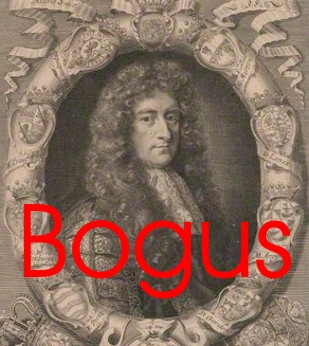 |
EARL OF MORAY, (Scotland) Thomas Randolph, 1st Earl of Moray (died 20 July 1332) (Father of BLACK AGNES), was Regent of Scotland, an important figure in the Scottish Wars of Independence, and one of the signers of the Declaration of Arbroath. He is usually described as a nephew of Robert the Bruce although their exact relationship is uncertain. The traditional view is that it was through a daughter of the first marriage of Countess Marjorie of Carrick, who was mother of King Robert by her second marriage. Volume 16 |
| COUNTESS OF DUNBAR (Scotland), AGNES, COUNTESS
OF DUNBAR and MARCH (1312 P-1369). Known from her swarthy complexion as BLACK AGNES.
Is celebrated for her spirited defense of Dunbar
Castle in January 1337-8. The countess was
the daughter of Randolph, earl of Moray, and
Isabel, the only daughter of Sir John Stewart
of Bonkyl, and, through her father, grand
niece to Robert Bruce.
She married PATRICK DUNBAR, tenth earl of Dunbar and March (1285-1369), who first came into prominence as an adherent of the English. Volume 16 |
|
| EARL OF MORAY (Scotland), Thomas Randolph, 2nd Earl of Moray (died August 11, 1332), a Scottish military commander, held his title for just 23 days. The son of Thomas Randolph, 1st Earl of Moray, a companion-in-arms of King Robert I of Scotland, he succeeded his father on July 20, 1332. Thomas, 2nd Earl of Moray had a chief command under the Earl of Mar ranged against the army of Edward Balliol at the Battle of Dupplin Moor, where he was killed. Volume 16 |
EARL OF MORAY, (Scotland) John Randolph, 3rd Earl of Moray (1306 – 17 October 1346) was an important figure in the reign of David II of Scotland, and was for a time joint Regent of Scotland. He was son of the famous Thomas Randolph, 1st Earl of Moray, a companion-in-arms of Robert the Bruce. Upon the death of his elder brother Thomas, 2nd Earl at the Battle of Dupplin Moor in 1332, John succeeded to the earldom. He at once took up arms on behalf of his sovereign and cousin King David II and surprised and defeated Edward Balliol at the Battle of Annan in December 1332. At the Battle of Halidon Hill on 19 July 1333, he commanded the first division of the Scots' Army, supported by Lord Andrew Fraser and his two brothers, Simon and James. Escaping from the carnage there he retired to France. John returned to Scotland the following year, when he and the High Steward of Scotland (the future King Robert II of Scotland) were appointed joint Regents, and set about trying to restore order to the nation. He was successful in taking prisoner the Comyn Earl of Atholl, commander of the English forces in Scotland, but, on his swearing allegiance to the Scottish Crown he was set free. Comyn, however, disregarded his oath, returned to the English camp, and resumed his hostilities. In August 1335 led an attack on the Burgh Muir near Edinburgh against a body of Flemish auxiliaries in the English service, under Count Guy de Namur, and forced them to surrender. But escorting the Count to the Borders he fell into an ambush and was made prisoner by William de Pressen, (English) Warden of Jedburgh. He was confined first at Nottingham Castle, and afterwards in the Tower of London. On 25 July 1340, he was removed to Windsor Castle. In 1341 he was exchanged for the Earl of Salisbury, a prisoner with the French, and Moray then returned to Scotland. In February 1342 he invaded England with David II of Scotland. At the fatal Battle of Neville's Cross, outside Durham, on 17 October 1346 John, with Douglas, Knight of Liddesdale, commanded the right wing of the Scottish army, and he was killed during the first English attack. He was married to Euphemia de Ross but the marriage was childless. The Earl's sister, Black Agnes, assumed the honours as Countess of Moray. Volume 16 |
| BARON THURLOW, (east central England) EDWARD, first BARON THURLOW (1731-1806), lord chancellor, eldest son of the Rev. Thomas Thurlow (d. 1762), incumbent successively of Little Ashfield, Suffolk, and of Thurston, Long Stratton, and Knapton, Norfolk, by Elizabeth, daughter of Robert Smith, a descendant of Sir Richard Hovell, esquire of the body to Henry V. Thurlow was tall, well built, and singularly majestic in appearance. His features, though stern, were regular, and a swarthy complexion matched well with his keen black sparkling eyes and bushy eyebrows. Volume: 56 |
|
BARON OF LEXINGTON, (middle east England) SUTTON, ROBERT, second BARON LEXINGTON (1661-1723), born at Averham Park, Nottinghamshire, the only son of Robert, first baron Lexington by his third wife, Mary, daughter of Sir Anthony St. Leger. he succeeded his father as second Baron Lexington in October 1668.
Volume: 55 |
SIR WILLIAM DOUGLAS, (d. 1392) LORD OF NITHSDALE (Scotland), was the illegitimate son of Archibald, third earl of Douglas himself the illegitimate son of the l Good' Sir James. For comeliness and bravery he was a worthy descendant of such ancestors, and the historians of the period describe him as inheriting several of the personal features of his grandfather, being large-boned, of great strength, tall and erect, bearing himself with a majestic mien, yet courteous and affable, and in company even hearty and merry. He
Inherited the swarthy complexion of the
Good Sir James, and was also called the
Black Douglas. |
|
SIR STEPHEN FOX, (1627-1716), Statesman, born on 27 March 1627, was the youngest son of William Fox of Farley, Wiltshire. In his seventy seventh year, Fox, unwilling that so plentiful an estate should go out of the name, and being of a hale constitution,' married as his second wife, 11 July 1703, Christian, daughter and coheiress of Francis Hopes, rector, first of Haceby and afterwards of Aswar by, both in Lincolnshire. By this lady, who was then in her twentysixth year, Fox became the father of four more children: Stephen (ft. 1704), afterwards Earl of Ilchester; Henry (b.1705), first Lord Holland; a daughter, Christian, twin with Henry (d. 1708); and another daughter, Charlotte, married in July 1729 to Edward, third son of William, fifth lord Digby. The second Lady Fox dying at Bath, 17 Feb. 1718 1719, was buried at Farley. In the picture at Holland House Sir Godfrey Kneller endows her with small and pretty features, and hair and complexion as dark as her grandson's. Volume 20 |
This piece for historical interest only. CONSTANTINE I (d. 879) Son of Kenneth Macalpine, king of Scotland According to the Pictish Chronicle,
Olaf was slain by Constantine when on
a raid in the following year, but the ' Annals
of Ulster relate that he destroyed Alrhyth
(Dumbarton), after a four months' siege, in
870, and retired in 871 to Dublin with two
hundred ships and a great body of men, Anglo
Britons and Picts. After this he disappears
from the Irish annals, so that his death may
possibly have been antedated by some years
in the account of the Pictish Chronicle. Ivar,
another of the Norse Vikings of Dublin, who
had fought along with Olaf, died about the
same time, but Scotland was still exposed to
incursions from other leaders of the same
race. Thorstein the Red, a son of Olaf, by
Audur, the wealthy daughter of Ketill Flatnore, attacked the northern districts, and,
according to the Icelandic Landnamabok/conquered ( Katanes and Suderland, Ross
and Norway, and more than half Scotland.
But his kingdom, which, perhaps, was acquiesced in by Constantine, who had slight
hold of the northern parts, was brief, and he
was slain by the men of Alba by a stratagem
or treachery in 875. In the South Halfdane
the Danish leader who led the northern of
the two bands (Guthrum, Alfred's opponent
commanded the other), into which the formerly united host of .that people was divided,
ravaged the east coast of Britain, laid waste
Northumbria, and destroyed the Picts of Two years later another band of Danes, the Irish Dubhgall, or Black Strangers, having been driven from Ireland by the Fingall, or White Strangers, made a sudden descent on Scotland by way of the Clyde and, penetrating into the interior, defeated the Scots at Dollar, from which they passed to Inverdovat, in the parish of Forgan in Fife, where Con stantine was slain (877). Tradition points to the long black cave, near Crail, as the scene of his death. [Robertson's Scotland under her Early Kings; Skene's Celtic Scotland.] M. M. |
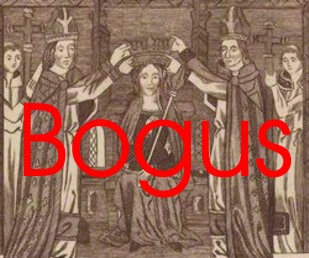
QUEEN ANNE OF BOHEMIA (1366-l394) (Bohemia the western two-thirds of the Czech Republic), first Queen of Richard II, was the eldest daughter of the Emperor Charles IV by his fourth wife, Elizabeth of Pomerania. She was born at prague on II May 1866. Her father was the son of that blind king, John of Bohemia, who was killed at the battle of Creasy, and was king of Bohemia himself as well as Emperor. Anne, says one writer, is not the handsomest
women in the world, is of middling stature, swarthy complexion, long neck, wide mouth, bosom not much raised, and in fact has nothing but the king. |
 |
| Duke of Newcastle-upon-Tyne, (north east England) John Holles, (1662–1711)
was the son of the 3rd Earl of Clare and his
wife Grace Pierrepont.
In person Holles is described as a black, Volume 27 |
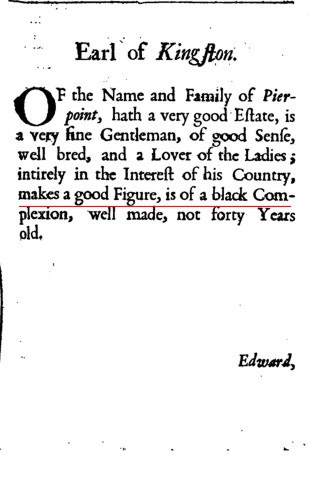
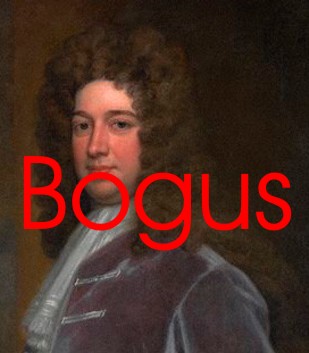
| DUKE OF KINGSTON, (East Midlands of England, were High Sheriff of Nottinghamshire, Derbyshire and the Royal Forests). PIERREPONT, EVELYN, first DUKE OF KINGSTON (1665 P-1726), was third son of Robert Pierrepont of Thoresby, Nottinghamshire, by his wife Elizabeth, daughter and coheiress of Sir John Evelyn, of West Dean,Wiltshire. Kingston, is thus described by Macky in 1705: He hath a very good estate, is a very fine gentleman, of good sense, well-bred, and a lover of the ladies ; entirely in the interest of his country; makes a good figure, is of a Black complexion, well made, not forty years old. |
 |
| EARL OF WARWICK, (Central England) GUY DE BEAUCHAMP.
(d. 1315), a lord ordainer, succeeded his father,
William, earl of Warwick, the grandson of BEAUCHAMP, WALTER DE, d. 1236]. In 1298. He distinguished himself at once by his bravery
at Falkirk (22 July 1298), for which he received
grants of estates in Scotland, and he
did homage for his lands. He was one of the seven
Earls who signed the famous letter to the pope
(12 Feb. 1301), rejecting his authority in the
Scottish question. King Edward was present at his death |
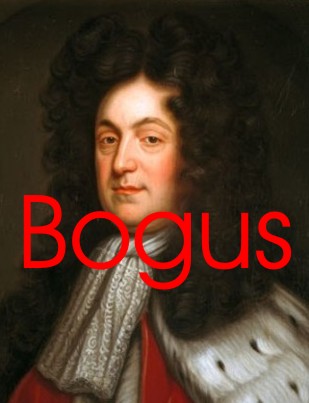
LORD BELHAVEN, (Scotland) JOHN HAMILTON, second LORD BELHAVEN (1656-1708), born 5 July 1656, was eldest son of Robert Hamilton (d.1696), lord Presmennan, one of the judges of the court of session, by Marion Denholm, and elder brother of James Hamilton of Pencaitland, who was appointed a lord of justiciary in 1712 Macky (Memoirs, p. 236) caricatures him as Volume 24 |
 |
| EARL OF ORMONDE, (Ireland) tenth Earl THOMAS BUTLER (1532-1614), Thomas, who was called, from his dark complexion, the 'Black Earl' succeeded his father in the earldom and estates at the age of fourteen. He was brought up at the English court with a view to alienating his sympathies from Ireland, and was the first of his family to adopt Protestantism. He was knighted on Edward VI's accession in 1547. After Edward's death in 1553, the priests spread a false report that the young earl had been murdered in England, and the Irish on his estates, which were then managed by English officials, rose in revolt. Volume 8 |
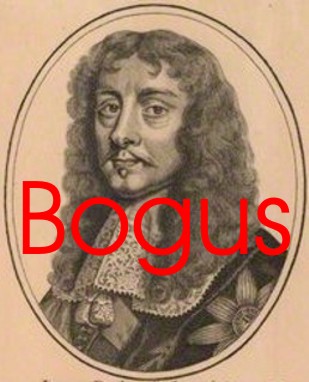 |
DUKE OF NEWCASTLE, (north east England) WILLIAM CAVENDISH, (1592-1676),
son of Sir Charles. Newcastle was
buried in St. Michael's Chapel, Westminster.
Abbey. His wife, in the life of her husband,
Describes his stature as a middle size, and
his complexion sanguine. Duke of Newcastle-upon-Tyne is a title which has been created three times in British history while the title of Duke of Newcastle-under-Lyne has been created once. The title was created for the first time in the Peerage of England in 1664 when William Cavendish, 1st Marquess of Newcastle-upon-Tyne was made Duke of Newcastle-upon-Tyne. He was a prominent Royalist commander in the Civil War. Volume 9 |
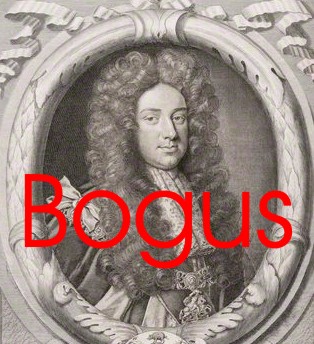 |
LORD THOMAS FAIRFAX, first Lord Fairfax of
|
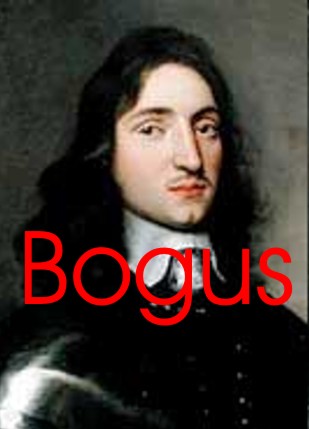 |
LORD LAURENCE ESMONDE (d.1770) (northern Ireland). He is said to have been a man of 'sanguine Complexion. Volume: 18 |
| DRAYTON, MICHAEL (1563-1631),
poet, was born at Hartshill, near Atherstone, Warwickshire, in 1563.
In person he was small, and his complexion was swarthy. Volume 16 |
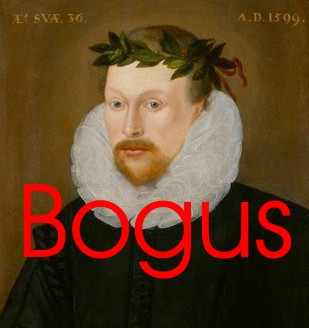 |
BLACKADER, CUTHBERT (d. 1485),
A chieftain of the Scottish border, received |
| JOHN FELTON, (d. 1570), catholic layman, was descended from an ancient family
in Norfolk. He was a gentleman of large
property, and resided at Bermondsey Abbey,
near Southwark, Surrey. His wife had been
maid of honour to Queen Mary, who just
before her death recommended her to Queen
Elizabeth. Indeed, Elizabeth held her in
great respect, for they had been friends and
companions in childhood, and on this account
Mrs, Felton was favoured with a special
grant to keep a priest in her house.
Felton was low of stature, and of a black Volume 18 |
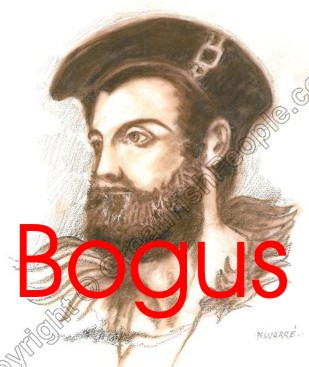
| MAJOR GENERAL O'NEILL, HUGH (H, 1642-660), Irish general, nephew of the celebrated Owen Roe O’Neill. He was a major Irish commander against the English parliamentary forces of Oliver Cromwell. Borm in the Spanish Netherlands, was son of Art, who was elder brother of Owen Roe O'Neill (d. 1649), and nephew of Hugh O'Neill the great Earl of Tyrone. Hugh gained distinction as an officer in the army of Spain, and accompanied Owen O'Neill in 1642 to Ireland, where, from his father, he was known as 'MacArt,' and styled in Irish ' buidhe,' or the swarthy, from his complexion. Volume 42 |
Owen Roe O'Neill |
 |
| PARSONS or PERSONS, ROBERT Dodd in describing his personal appearance, says 'he was of middle size, his complexion rather swarthy, which, with strong features, made his countenance somewhat forbidding. Volume 43 |
BISHOP SQUIRE, SAMUEL (1713-1766), bishop of St. Davids, baptised at Warminster, Wiltshire, in 1713, was son of Thomas Squire (d. 30 Nov. 1761, aged 74), druggist and apothe cary of that town, Squire's dark complexion gave him the nickname of The Man of Algola (Angola?). Volume 53 |
CAMERON, Sik Ewen, or Evan, of Locliie, (Scotland highlands) a chief of the clan Cameron, distinguished for his chivalrous character, was boru in February 1629. He was called by his followers Mac'onnuill Dhu, or the son of Black Donald, according to the custom of their race, after his father Donald, the chief who preceded him ;also Ewen Dhu, or Black Evan, from his own dark complexion. He was brought up at Inverary castle, under the guardianship of his kinsman the marquis of Argyle, under whose charge he was placed in his tenth year, being regarded as a hostage for the peaceable behaviour of his clan. Argyle endeavoured to instil into his mind the political principles of the covenanters, but it is said that he was converted to the side of the king by the exhortations of Sit Robert Spottiswood, formerly president of the Court of Session, who had been taken at the battle of Pliiliphaugh in September 1645, and was afterwards executed. At the age of eighteen ho quitted Inverary castle, with the declared intention of joining the marquis of Montrose, who, however, had previously disbanded his forces, and retired to the Continent. Although the royal cause seemed lost, Lochiel kept his clan in arms, and was able to protect his estate from the incursions of Cromwell's troops. Excerpt from The Scottish nation |
| COLONEL FREDERICK, (1725-1797), also known as FREDERICK DE NEXJHOFF, author of 'Description of Corsica,' was, by his own account, the only son of Theodore Etienne, Baron de Neuhoff, king of Corsica, by his wife, an Irish lady named Sarsfield, daughter of Lord Kilmallock, and one of the suite of Queen Elizabeth Farnese of Spain. The date of his birth was supposed by his family to be about 1725. In person Frederick was spare, of middle Volume 20 |
SIR EDWARD MASSEY (1619-1674), Major-general, was the fifth son of John Massey of Coddington, Cheshire, and Anne, daughter of Richard Grosvenor of Eaton. In person he was of a 'middle stature with brown hair ' and ' sanguine complexion. Volume 37 |
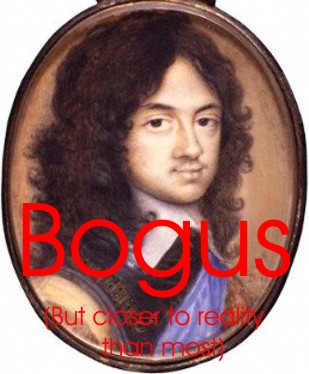
KING CHARLES II (1630–1685) was monarch of the three kingdoms of England, Scotland, and Ireland. Charles II's father, King Charles I, was executed at Whitehall on 30 January 1649, at the climax of the English Civil War. Although the Parliament of Scotland proclaimed Charles II King of Great Britain and Ireland in Edinburgh on 6 February 1649, the English Parliament instead passed a statute that made any such proclamation unlawful. England entered the period known as the English Interregnum or the English Commonwealth, and the country was a de facto republic, led by Oliver Cromwell. Cromwell defeated Charles at the Battle of Worcester on 3 September 1651, and Charles fled to mainland Europe. Cromwell became virtual dictator of England, Scotland and Ireland. Charles spent the next nine years in exile in France, the United Provinces and the Spanish Netherlands. A political crisis that followed the death of Cromwell in 1658 resulted in the restoration of the monarchy, and Charles was invited to return to Britain. On 29 May 1660, his 30th birthday, he was received in London to public acclaim. After 1660, all legal documents were dated as if Charles had succeeded his father as king in 1649. A tall man, above two yards high, his hair a was indescribably coarse, struck the critical as deep brown, near to black. Evelyn speaks of his swarthy complexion. |
 |
 |
| DUKE OF MONTAGU, (Oxfordshire south central England)
RALPH (1638-1709),
Was the second son of Edward Montagu,
second lord Montagu of Boughton. Two engraved portraits of Montagu are among the Sutherland collection in the Bodleian Library (Catalogue, i. 648). Macky describes
him as of a middle stature, inclining to fat,
of a coarse, dark complexion.
Volume 38 |
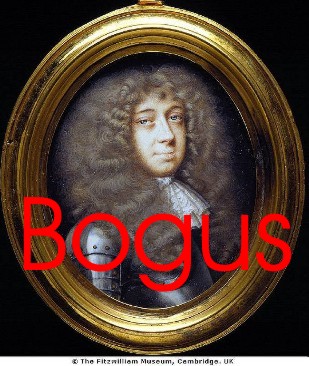
| EARL OF MIDDLETON, (Scotland) CHARLES, second EARL Of MIDDLETON and titular EARL OF MONMOUTH (1640P-1719), secretary of state to
James II, born about 1640, was eldest son of
John, first earl of Middleton, by his
wife Grizel. daughter of Sir James Durham of
Pitkerrow, and widow first of Sir Alexander
Fotheringham of Ballindrone, and secondly
of Sir Gilbert Ramsay of Balmain. Macky describes Middleton as 'a black
man, of a middle stature, with a sanguine
complexion, and one of the pleasantest companions in the world.' He also states that
he was ' one of the politest gentlemen in
Europe Volume 37 |
 |
BARON NORRIS OF RYCOTE, (south central England) SIR HENRY NORRIS, (1525-1601). Was son and heir of Henry Norris (d. 1536) who was executed and attainted as the alleged lover of Anne Boleyn. He seems to have been born about 1525. His age was officially declared in 1564 to be only thirty (DUGDALE), but this statement is irreconcilable with the records of his early years. Henry VIII restored to him much of his father's confiscated estate, 'with some strict conditions respecting the estate of his grandmother, who was one of the heirs of Viscount Lovell. 1554. During Mary's reign Norris resided at Wytham, Berkshire, one of the manors of his father-in-law. Williams had shared with Sir Henry Bedingfield the duty of guarding Elizabeth while she was imprisoned at Woodstock during Queen Mary's reign. He had treated the princess leniently, had invited her occasionally to Rycote, and his kindness was gratefully remembered by Elizabeth. She Consequently showed, after her accession to the throne, exceptional favour to Norris and his wife. The latter she playfully nicknamed her 'black crow' in reference to her Dark complexion. Volume: 41 |
EARL OF BEDFORD, (south central England) RUSSELL, EDWARD, (1653-1727), admiral of the fleet, born in Was the son of Edward Russell, a younger brother of William Russell, first duke of Bedford. Bedford is described in 1704 as ' of a sanguine complexion, inclining to fat ; of a middle stature.' His portrait, by R. Bockman, is in the Painted Hall at Greenwich ; another, by Sir Godfrey Kneller, has been engraved. Volume: 49 |
| LORD CHANCELLOR OF IRELAND
METHUEN, JOHN (1650 P-1706), was the
eldest son of Paul Methuen of Bradford, Wiltshire, clothier, by his wife Grace (d. 1676), daughter of John Ashe of Freshford, Somerset. He is described by Macky as a man of intrigue, but very muddy in his conceptions, and not quickly understood in anything. In his
complexion and manners much of a Spaniard:
a tall black man.
Volume 37 |
| Hugh Hyacinth O'Rorke MacDermot, Prince of Coolavin (west central ireland). The MacDermot (1834-1904), attorney-general for Ireland, born
on 1 July 1834 at Coolavin, co. Sligo, was
eldest of the twelve children of Charles
Joseph MacDermot, titular ' Prince of
Coolavin,' by his wife Arabella O'Rorke,
the last lineal descendant of the Breffny
family. The family, which was Roman
catholic, lost most of their lands in the
civil wars in Ireland in the seventeenth
century, and they lived for generations in
great retirement at Coolavin, where the
head, despite his narrow means, maintained
much personal state A brother, John MacDermot (known locally from his swarthy complexion as “The Black Prince”) became a canon of Achonry and was a notable rider to hounds. Volume S-2 |
TISDALL, PHILIP (1707-1777), Irish politician, was born at Finglas, near Dublin, in 1707. He was the son of Richard Tisdal (registrar of the Irish court of chancerv, and member for the borough of Dundul'k, 1707-13, and county of Louth, 1713-27, in the Irish parliament), by his wife Marian, daughter of Richard Boyle, M.P.forLeighlin, a descendant of the great Earl of Cork. As a leading member of the Irish cabinet Tisdal is satirised in ' Baratariana 'under the name of 'Don Philip the Moor,' and also in ' Pranceriana,' and Irish periodical literature testifies abundantly to the importance of 'Black Phil,' as Tisdal, from his dark complexion, grave demeanour, and sardonic temper, was commonly known. Volume: 56 |
| DAYROLLES, SOLOMON (d. 1786), Diplomatist, nephew and heir of James
Dayrolles, king's resident for some time at Geneva, and from 1717 to 1739 at the Hague, who died on 2 Jan. 1739, was the godson of Lord Chesterfield, the wit and politician, through whose friendship the young official obtained speedy advancement in his profession. He was secretary to Lord Chesterfield and was nominated by him gentleman
usher of the black rod, a sinecure to which he
was entitled, as the donor ingeniously said,
by the excessive darkness of his complexion.
Volume 14 |
BISHOP DEE, FRANCIS, D.D. (d. 1638), bishop of Peterborough, 1634-8, was the son of the Rev. David Dee of St. Mary's Hall, Oxford, a member of an old Shropshire family, who held the rectory of St. Bartholomew the Great, West Smithfield. He had a very fair, clear, sanguine complexion, a long beard as white as milk. Volume 14 |
| ARCHBISHOP DOLBEN, JOHN (1625-1686), archbishop of York (1683-6), was the eldest son of Dr. William Dolben prebendary of
Lincoln and rector of Stanwick, Northamptonshire, where he was born 20 March 1625. His person was commanding, but overcorpulent; his complexion dark. Volume 15 |
| DOUGLAS, SIR JAMES, of Douglas,
'the Good, LORD OF DOUGLAS (1286- 1330),
(Scotland) Was the eldest son of Sir William Douglas of
Douglas, the hardy by his first wife,
Elizabeth Stewart; for Barbour calls James,
high steward of Scotland. When his father was seized and imprisoned by Edward I, he was sent to France, whence, after a three years' sojourn in Paris, he returned to find his father dead and himself stripped of his inheritance, which had been given by Edward to Sir Robert Clifford. He was dreaded throughout the
north of England. He was called ‘the Black
Douglas' from his complexion.
Volume 15 |
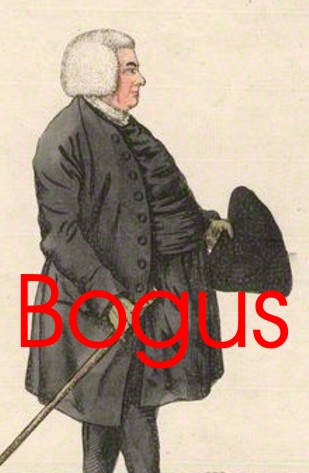
| BISHOP HORSLEY, SAMUEL (1733-180l), Son of John Horsley, principal of Edinburgh University. Description of him at the age of seventeen; Volume 27 |
 |
| MURPHY, MICHAEL (1767-1798),
Irish rebel, the son of a peasant, was born at
Kilnew, co. Wexford, about 1767. Having
acquired some learning at a hedge-school at
Oulart, he was ordained a priest at "Whitsuntide 1785, and sent to complete his education at the Irish College at Bordeaux. On
his return to Ireland he was appointed officiating priest of the parish of Ballycanew in
the diocese of Ferns.
In 1798 he was still a young man, strongly built, and of a dark complexion. Volume 39 |
| BISHOP WALCHER (d. 1080), bishop of Durham, was a native of Lorraine, of noble birth, who became a secular priest, and one
of the clergy of the church of Liege. In
1071 he was appointed by the Conqueror to
succeed Ethelwine as bishop of Durham,
and was consecrated at Winchester by
Thomas, archbishop of York.
He was very tall, and had snow-white hair and a ruddy complexion is said to have prophesied his martyrdom. Volume: 59 |
| MARTINEAU, JAMES (1805-1900),
Unitarian divine, youngest son and seventh
child of Thomas Martineau
His colleague's son, describes him at that period as ' benevolently ugly, if ugly at all, with his rough-cast features, wild upstanding black hair, low broad forehead, and swarthy complexion' Volume S-3 |
| BLACKWOOD, WILLIAM (1776-1834), publisher, of 'Blackwood
Magazine' was born at Edinburgh.
He was described him in his prime among the literary loungers in his shop as ' nimble, active looking, with a complexion very sanguineous. Volume S-2 |
| DAUBUZ, CHARLES (1673-1717)
Was born in the province of Guienne
in France, in July 1673, being son of Isaie
d'Aubus, protestant pastor at Nerac. On the
revocation of the edict of Nantes, the father
obtained from Louis XIV a document, still
preserved in the family archives, authorising
him to leave France with his wife, Julie, and
four children. He started for England, but
on reaching Calais he died at an inn, and
was privately buried in the garden, the innkeeper helping his widow, during the night,
to dig the grave. She was afterwards joined
at Calais by her husband's brother, who held
some ecclesiastical preferment in the north
of England, and he succeeded in bringing the widow and her children over to this country, and settling them in Yorkshire. Charles Daubuz was admitted into Merchant Taylors' School, London, on 11 Sept. 1686 (Robinson, Register of Merchant Taylors' School, i. 317). He was admitted a sizar of Queens' College, Cambridge, 10 Jan. 1689. He graduated B.A. 13 Jan. 1693, was appointed librarian of his college on 21 March in the same year, and continued in that employment tiU 10 Aug. 1695. In the following year he succeeded Thomas Balguy in the mastership of the grammar school of Sheffield, and he was the early tutor of his predecessor's son, John Balguy [q. v.] He commenced M.A. at Cambridge in 1697 {Cantabrigienses Graduatied. 1787, p. 110). He left Sheffield in 1699, on being presented by the dean and chapter of York to the vicarage of Brotherton, a small viUage near Ferrybridge in the West Riding of Yorkshire. This vicarage, of the annual value of 60/. or 70/., was all the preferment he ever enjoyed, and in order to support a numerous family he was obliged to undertake the education of the sons of several gentlemen in the neighbourhood. He devoted his leisure to the composition of his bulky commentary on the * Apocalypse,' which was eventually published by his widow. It is stated in a manuscript note by the Rev. John Law, who afterwards became vicar of Brotherton, that * when he had finished his book he went to consult Dr. Bentley (the then great critic of the age) ; but the doctor (as is supposed), thinking Mr. Daubuz would outshine him in learning, and eclipse his glory, did not encourage him to publish it. Upon which poor Mr. Daubuz returned home unhappy in mind and weary in body, sickened of pleuritic fever, and died in a few days,' on 14 June 1717. Law says he was ' a tall, stout, strong, hale man, of a swarthy, black complexion, wore his own strong, black curled hair, and had a very loud voice. He was a worthy, good man, a man beloved and re spected by all.' |
| MURRAY, LINDLEY (1745-1826), grammarian, was born at Swatara, Penn sylvania, on 22 April 1745. His father, Robert Murray, a member of an old Quaker family, was one of the leading New York merchants. Murray was the eldest of twelve children, all of whom he survived, although, he was puny and delicate in childhood. When six years old, he was sent to school in Philadelphia, but soon left to accompany his parents to North Carolina, where they lived until 1753. Murray was tall, slender, and of a ruddy complexion. In spite of bad health he was always cheerful, and his manner was conspicuously modest. |
CONSTANTINE I (d. 879) for historical interest only. HAMILTON, JOHN - SECOND LORD BELHAVEN (1656-1708) DOUGLAS, SIR WILLIAM, LORD of NITHSDALE (d. 1392 ?) DAYROLLES, SOLOMON (d. 1786) |
THOMAS RANDOLF, 1st EARL OF MORAY DAUBUZ, CHARLES (1673-1717) MIDDLETON, FIRST EARL OF BLACKADDER FAMILY |
 |
 |
The Surname "Bower"
German
The historical and enchanting region of Austria is the birthplace of the distinguished family name Bower. Austria, which was originally home to a Celtic people, was conquered by the Roman Empire in about 15 BC. Following the fall of Rome, Austria was repeatedly invaded by barbarian tribes, such as the Vandals, Visigoths, and Huns, who swept in from the east. During the 5th and 6th centuries, the Alemanni, Avars and Slavs settled Austria. The Avars were defeated in 785 by the Frankish emperor Charlemagne, who set up the East Mark, which later became known as the Österreich. Otto I defeated the Magyars in 955. Austria was ruled by the Babenburger dynasty until 1278, when they were succeeded by the Hapsburg dynasty, which ruled Austria until the 20th century. One can encounter great variation in the spelling of surnames: in early times, spelling in general, and thus the spelling of names was not yet standardized; and later, spellings would change with branching and movement of families.Variations of the name Bower include Bauer, Baur, Bauerr, Bauerre, Bower, Boerema, Bohr, Burr and many more.
First found in Austria and Bavaria, where the name contributed greatly to the development of an emerging nation which would later play a large role in the tribal and national conflicts of the area. In later years the name branched into many houses, each playing a significant role in the local social and political affairs.
Scottish
Bower is an ancient name for a person who worked as a maker of bows. Further research revealed that the name is derived from the Old English word which means bow maker. Surnames that evolved in the Middle Ages often appear under many spelling variations. These are due to the practice of spelling according to sound in the era before dictionaries had standardized the English language. bower has appeared as Bower, Bowre, Bowyr, Bowers, Bowyer, Beauer and many more.
 |
 |
The Surname "More"
Austria
The name More comes from the Austrian empire. The tradition of adopting hereditary surnames came to this German speaking region after the 12th century, and surnames derived from places where people lived were a primary source. Many local names carry the prefix "von", meaning "of" or "from". It originally indicated land ownership, and is sometimes a mark of nobility. The More family originally lived in the modern state of Austria In the medieval era, many different cultural groups lived in the German states. There are thus many regional variations of German surnames from that era. Westphalians spoke Low German, which is similar to modern Dutch. Many German names carry suffixes that identify where they came from. Others have phrases attached that identify something about the original bearer. Other variations in German names resulted from the fact that medieval scribes worked without the aid of any spelling rules. The spelling variations of the name More include Mohr, More, Morher, Mohrer, Mor, Moor and others. First found in Austria and the Rhineland, where the name became noted for its many branches within the region, each house acquiring a status and influence which was envied and enrolled by the princes of the region. In their later history the family became a power unto themselves and were elevated to the ranks of nobility as they grew into this most influential family.
 |
 |
The Surname "More" continued
France
Spelling variations of this family name include: Moret, Morez, Moré, Morais, Morey, Moraie, Moraies, Mauret, Maurez, Maurais, Maurey, Mauraie, Mauraies, Morret, Maurret, Morrez, Morré, Morrais, Maurrais, Morrey, Maurrey, Morraie, Maurraie, Morraies, Maurraies, Mouré, Mouret, Mourez, Mourière, de Moret and many more. First found in Ile-de-France, where the family has held a family seat since ancient times.
Ireland
There are several distinct sources of the More surname in Ireland. Most of the name find their roots with the Anglo-Norman "Strongbow" invasion of the 12th century. Many of these became de Mora. Others derived from the Old Irish "O Mordha," from the word "mordha," meaning "stately," or "noble." The English surname More is derived from the personal name "More," which is itself derived from the Old French word "maur," meaning "Moor. Since church officials and medieval scribes spelt each name as it sounded to them; as a result, a single person could accumulate many different versions of his name within official records. A close examination of the Origins of the name More revealed the following spelling variations: Moore, More, Moor, O'More, Moores, Mores, McMore, Moire, Moare, MacMoore, McMoir, Moir, O'Moore, O'Moire, McMoare, MacMoir, MacMoare, Mooer and many more. First found in Leicestershire, before the name had made its way to Ireland; their first records appeared on the early census rolls taken by the early kings of Britain to determine the rate of taxation of their subjects.
Scotland
The More surname in Scotland is thought to have been a topographic name for someone who resided near a moor, or heath. In Gaelic, Mor means great or big; therefore, a scribe may have mistaken the adjective Mor as a surname More or Muir. This may explain the occurrence of the surname Muir, or a variant in Northern Scotland. The name Muir would seem out of place in that region because it holds a meaning of "living by a moor or heath," not the typical landscape of the highlands. Judging by its meaning, Muir is a local name of the south that described the area, in which the original bearer lived or held land. Spelling variations of this family name include: Muir, Mure, Moor, Moore, Mure, More, Moorman and many more. First found in Ayrshire, where they held a family seat from early times and their first records appeared on the census rolls taken by the ancient Kings of Scotland to determine the rate of taxation of their subjects.
 |
 |
Andrewes
The Picts were the ancient Scottish tribe where the ancestors of the andrewes family lived. The name andrewes comes from the baptismal name Andrew which in Greek means manly. The name was popular as both a personal name and a surname, likely because it was the name of Scotland's patron saint. In Gaelic the name is Aindrea and Anndra which again means manly. Before the first dictionaries appeared in the last few hundred years, scribes spelled according to sound. spelling variations are common among Scottish names. andrewes has been spelled Andrew, Andrews, MacAndrew, Androw, Androe, Andro and many more. First found in Caithness. This family was strongly associated with the Clan Ross. It was originally known as the Clan Siol Andrea, meaning the race of Andrew. However, from about the year 1100 the Andrews moved south to the Dumfriesshire area of southwest Scotland. Duncan Andrew, Chief of the clan, rendered homage to King Edward I of England in 1296.
 |
 |
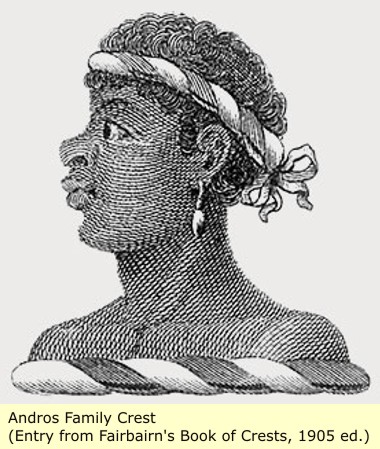
Andros
The ancient Pictish-Scottish name andros comes from the baptismal name Andrew which in Greek means manly. The name was popular as both a personal name and a surname, likely because it was the name of Scotland's patron saint. In Gaelic the name is Aindrea and Anndra which again means manly. Scribes in the Middle Ages did not have access to a set of spelling rules. They spelled according to sound, the result was a great number of spelling variations. In various documents, andros has been spelled Andrew, Andrews, MacAndrew, Androw, Androe, Andro and many more. First found in Caithness. This family was strongly associated with the Clan Ross. It was originally known as the Clan Siol Andrea, meaning the race of Andrew. However, from about the year 1100 the Andrews moved south to the Dumfriesshire area of southwest Scotland. Duncan Andrew, Chief of the clan, rendered homage to King Edward I of England in 1296.
 |
 |
Amo
Spelling variations of this family name include: Amor, Amores, Amorim, Amo and others. First found in Castile, in north central Spain.
Some of the first settlers of this family name or some of its variants were: Early migrants to the New World bearing this surname include: Juan De Amor, who arrived in Florida in 1538; Lorenzo de Amor, who arrived in Peru in 1594.
 |
 |
Morfyn
Spelling variations of this family name include: Morfin, Morffin, Morfee, Maufee, Morfyn, Murfyn and others. First found in Essex where they held a family seat as Lords of the Manor. The Saxon influence of English history diminished after the Battle of Hastings in 1066. The language of the courts was French for the next three centuries and the Norman ambience prevailed. But Saxon surnames survived and the family name was first referenced in the 13th century when they held lands.
 |
 |
Christie
The Picts were the ancient Scottish tribe where the ancestors of the christie family lived. The name christie comes from Christopher or perhaps from Christian. When the first dictionaries were invented in the last few hundred years, spelling gradually became standardized. Before that time, scribes spelled according to sound. Names were often recorded under different spelling variations every time they were written. christie has been written Christie, Chrystie, Chrysty, Christy, McChristie, McChristy, Christe, Christi and many more. First found in Edinburghshire, where they were recorded as a family of great antiquity seated at Carvant in that shire. By 1296 they had moved northward to Stirlingshire and there is a section of the Stirling Antiquary called "the Christies and their doings." A charter from 1457 granted by the abbot of Lindores mentions John Chrysty as a burgess. Later, John Chryste was listed as burgess of Aberdeen in 1530.
 |
 |
 |
Big
The proud Norman name of big was developed in England soon after the Norman Conquest of England in 1066. It was name for a large, stout, or strong man. The name is Old Norse in origin, and stems from the Old English root bigge. Spelling variations in names were a common occurrence in the eras before English spelling was standardized a few hundred years ago. In the Middle Ages, even the literate regularly changed the spellings of their names as the English language incorporated elements of French, Latin, and other European languages. Many variations of the name big have been found, including Biggs, Bigg, Big, Bigge, Byggs, Bygges, Bigges and others. First found in Essex, where they had been granted lands by King William after the Norman Conquest in 1066.
Dobson
dobson is a name of Anglo-Saxon origin and came from Dob, the baptismal name meaning the son of Robert. Spelling variations in names were a common occurrence before English spelling was standardized a few hundred years ago. In the Middle Ages, even the literate spelled their names differently as the English language incorporated elements of French, Latin, and other European languages. Many variations of the name dobson have been found, including Dobson, Dobsons, Dobsin, Dobsan, Dobsaun, Dobsone and many more. First found in Lancashire where they held a family seat from very ancient times.
Gilham
gilham is a name of ancient Norman origin. It arrived in England with the Norman Conquest of 1066. gilham is a name that comes from the Old French given name Guillaume. The name Guillaume was modified into two forms after arriving in England: Gillham and William. Anglo-Norman names are characterized by a multitude of spelling variations. When the Normans became the ruling people of England in the 11th century, they introduced a new language into a society where the main languages of Old and later Middle English had no definite spelling rules. These languages were more often spoken than written, so they blended freely with one another. Contributing to this mixing of tongues was the fact that medieval scribes spelled words according to sound, ensuring that a person's name would appear differently in nearly every document in which it was recorded. The name has been spelled Gillham, Gillam, Gilliam, Gilham, Gillem, Gillum, Giliam, Gwillam, Gwillham, Gwilliam, Gwilham, Gyllham, Gylham and many more. First found in Essex where they had been granted lands by King William, Duke of Normandy, for their assistance at the Battle of Hastings in 1066.
Haynes
The history of the name haynes begins with the Anglo-Saxon tribes of Britain. It is derived from the baptismal name for Haine. As the naming tradition grew in Europe baptismal names began to be introduced in many countries. Baptismal names were sometimes given in honor of Christian saints and other biblical figures. There are very few Christian countries in Europe that did not adopt surnames from these religious figures. The English language only became standardized in the last few centuries; therefore, spelling variations are common among early Anglo-Saxon names. As the form of the English language changed, even the spelling of literate people's names evolved. haynes has been recorded under many different variations, including Haines, Hains, Hain, Haine, Haynes, Hainson and others. First found in Lincolnshire where they held a family seat from very ancient times, some say well before the Norman Conquest and the arrival of Duke William at Hastings in 1066 A.D.
Monson
We must look to France for the early Origins of the name monson for it is here that the name was derived from Monceaux, who was descended from the ancient lords of Maers and Monceaux, Counts of Nevers. The Count of Nevers (c. 990) had a son named Landric of Nevers who was grandfather of William de Monson who is mentioned by Wace in 1066. This same person appears as William de Moncellis in the Exeter Domesday and as William de Nevers in Norfolk in 1086. Norman surnames are characterized by a multitude of spelling variations. The frequent changes in surnames are largely due to the fact that the Old and Middle English languages lacked definite spelling rules. The introduction of Norman French to England, as well as the official court languages of Latin and French, also had pronounced influences on the spelling of surnames. Since medieval scribes and church officials recorded names as they sounded, rather than adhering to any specific spelling rules, it was common to find the same individual referred to with different spellings. The name has been spelled Monson, Munson, Mounson and others. First found in Yorkshire and Lincolnshire where the aforementioned William descendants settled. The ancestry of this distinguished Norman name can be traced to Carleton, Lincolnshire when they were Lords of the manor Antecedent to 1200. Thomas de Monceaux (d. 1345) seized the manors of Killingholm and Keleby. His son, Sir John de Monceaux (or Monson) (d. 1363) seized Burton, all in the Lincolnshire.
Morison
The descendents of settlers in ancient Scotland were the first to use the name morison. It was derived from the name Maurice. This comes from the Latin personal name Mauritius, which means dark. Numerous legends exist for the Origins of this great Scottish clan. One old tale holds that the Clan's Norse forbears were shipwrecked off the Isle of Lewis, and saved themselves by clinging to driftwood; hence the Clan Plant badge is driftwood. Another branch claims descent from the O'Muircheasain bards of the outer Hebrides. This latter legend is not inconsistent with a possible shipwreck of the Norsemen, as many of the bardic missionaries from Ireland were of Norse descent. Others claim the Clan is descended from King Somerled, King of the Isles, who died in 1164. Again, this is compatible with history, as Somerled was descended from the Norse Kings of Ireland and gave origin to many of the more notable Scottish Clans.
Norleigh
Spelling variations of this family name include: Norley, Norley, Norleigh, Norlea, Norlie, Northley, Nothleigh, Northleigh, Norleighe, Norely and many more. First found in Cheshire where they held a family seat as Lords of the Manor. The Saxon influence of English history diminished after the Battle of Hastings in 1066. The language of the courts was French for the next three centuries and the Norman ambience prevailed. But Saxon surnames survived and the family name was first referenced in the 13th century when they held a family seat at Norley in that shire.
Pearson
pearson is an ancient Norman name that arrived in England after the Norman Conquest of 1066. The name pearson comes from the French given name Pierre, which is equivalent to the English Peter. A multitude of spelling variations characterize Norman surnames. Many variations occurred because Old and Middle English lacked any definite spelling rules. The introduction of Norman French to England also had a pronounced effect, as did the court languages of Latin and French. Therefore, one person was often referred to by several different spellings in a single lifetime. The various spellings include Pearson, Peerson, Pierson, Peirson and others. First found in Berwickshire where the name was derived as "son of Pier." Walter Pierson of Berwickshire rendered homage to King Edward I of England on his brief conquest of Scotland in 1296.
 |
 |
Lindsey
The lindsey family originally lived in the parish of Lindsay in the northern English county of Ealdric de Lindsay held estates in both Normandy and in Lincolnshire, England. He was a tenant of English estates for the Earl of Chester. Spelling variations of this family name include: Lindsay, Lyndsay, Lyndsey, Lindesey, Lindsey and many more. First found in Lanarkshire where they were descended from Randolph Lord of Toeni who was banished by Duke William from Normandy in 1058 along with many other knights. He settled on the borders of Lincolnshire and Leicestershire and erected a barony known as Linesi including Belvoir Castle. When the Duke of Normandy invaded England he was again forced to move and settled on the lands of Crawford in Lanarkshire Scotland. Earl David of Huntingdon then King David of Scotland confirmed the lands to the Clan in 1124.
 |
 |
The Surname "Buller"
German
First found in Bavaria, where the name Buller became noted for its many branches with the region, each house acquiring a status and influence which was envied by the princes of the region. In their later history the family became a power unto themselves and were elevated to the ranks of nobility as they grew into this most influential family.
Spelling variations of this family name include: Buller, Buler, Buhller, Buhler, Beuller, Bueller, Beuler, Bueler, Boller, Boeler, Bohler, Bohller, Boeller, Boeler, Boehler, Boehller, Bullen, Bulen, Bullel, Bulel, Bullere, Bulere, Buellen, Buelen, Buellel, Buelel, Buellere, Buelere, Bollen, Bolen, Bollel, Bolel, Bollere, Bolere, Boellen, Boelen, Boellel, Boelel, Boellere, Boelere, Bewlar and many more.
English
The history of the buller family name begins after the Norman Conquest of 1066. They lived in Cornwall. Checking further we found the name was derived from the Flemish region of Boulaere, where the family resided before emigrating to England. Anglo-Norman names are characterized by a multitude of spelling variations. When the Normans became the ruling people of England in the 11th century, they introduced a new language into a society where the main languages of Old and later Middle English had no definite spelling rules. These languages were more often spoken than written, so they blended freely with one another. Contributing to this mixing of tongues was the fact that medieval scribes spelled words according to sound, ensuring that a person's name would appear differently in nearly every document in which it was recorded. The name has been spelled Buller, Bullar, Buler and others. First found in Cornwall where they held a family seat from very early times and were granted lands by Duke William of Normandy, their liege Lord, for their distinguished assistance at the Battle of Hastings in 1066 A.D.
 |
 |
Agg
The name agg arrived in England after the Norman Conquest of 1066. The agg family lived in Oxfordshire. A multitude of spelling variations characterize Norman surnames. Many variations occurred because Old and Middle English lacked any definite spelling rules. The introduction of Norman French to England also had a pronounced effect, as did the court languages of Latin and French. Therefore, one person was often referred to by several different spellings in a single lifetime. The various spellings include Agg, Agge, Aug, Auge and others. First found in Auge, as De Augo from Crevecoeur, Calvados, in Normandy. The family were bailiffs of the town of Auge. Henry, Duke of Normandy issued a writ insisting that the men of their ilk would not be allowed to attend the fair at Crevecoeur.
 |
 |
Buckworth
The ancestors of the bearers of the buckworth family name are thought have lived in ancient Anglo-Saxon England. They were first found in the county of Hertfordshire, at Broxbourne. Until quite recently, the English language has lacked a definite system of spelling rules. Consequently, Anglo-Saxon surnames are characterized by a multitude of spelling variations. Changes in Anglo-Saxon names were influenced by the evolution of the English language, as it incorporated elements of French, Latin, and other languages.
Although Medieval scribes and church officials recorded names as they sounded, so it is common to find one person referred to by several different spellings of his surname, even the most literate people varied the spelling of their own names. Variations of the name buckworth include Buckworth, Buckworthe and others. First found in Hertfordshire where they held a family seat from very ancient times, some say well before the Norman Conquest and the arrival of Duke William at Hastings in 1066 A.D.
Haliburton
Spelling variations of this family name include: Halliburton, Haliburton, Haleyburton, Hollyburton, Halyburton, Halburton, Heliburton and many more. First found in Berwickshire where they held a family seat from very ancient times, some say well before the Norman Conquest and the arrival of Duke William at Hastings in 1066 A.D.
Soame
Spelling variations of this family name include: Soam, Soams, Soames, Somes, Soame, Soan, Soanes and others. First found in Suffolk where they held a family seat from very ancient times, as Lords of the manor of Berkesden, some say well before the Norman Conquest and the arrival of Duke William at Hastings in 1066 A.D.
 |
 |
Borthwick
The BoRTHwicK family name comes from a place name that was first used among the Viking settlers who arrived in the shores of Scotland in the Middle Ages. The BoRTHwicK name comes from someone having lived in the old barony of Borthwick, next to 'Borthwick Water' between Selkirk and Roxburghshire. Bearers of this surname have inhabited this area since at least the 14th century. Documents first mention 'Quondam' Thomas de Borthwick, who held lands in Middleton, MidLothian, and who had a charter from John of Gordon, Lord of that Ilk, for the lands near Lauder, between 1357 and 1367.Translation and spelling were non-standardized practices in the Middle Ages, so scribes had only their ears to rely on. This was a practice of extremely limited efficiency, and spelling variations in names, even within a single document, were the result. Over the years, BoRTHwicK has appeared Borthwick, Borthwicke, Barthwick, Barthwicke, Borthock, Borthok and many more. First found in Roxburghshire where this family prospered through an uncertain era of raiding, feuding and warring in Southern Scotland. By 1400, the Border feuds had taken shape into a Code, which although to us at this time may seem like straight outlawry, was a strict set of rules governing the apparent indiscriminate burning of homes and theft of cattle, horses and even women.
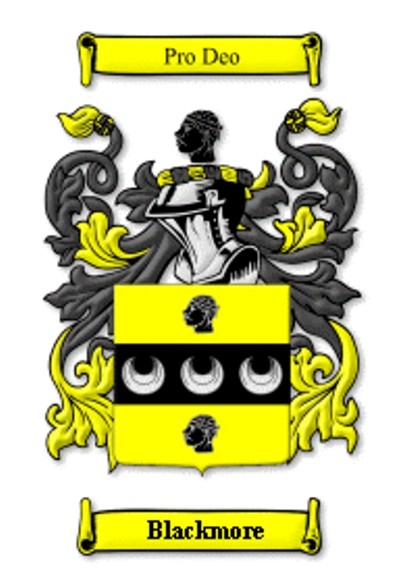
Black
The Origins of the Anglo-Saxon name blacke come from its first bearer, who was a person associated with the color black. The name blacke may have referred to someone with black hair or clothing, or to somone who worked in a profession such as chimney sweeping, which left its practitioners covered in soot {Laughter aside: please remember that the source of the name histories is "White"}. The first dictionaries that appeared in the last few hundred years did much to standardize the English language. Before that time, spelling variations in names were a common occurrence. The language was changing, incorporating pieces of other languages, and the spelling of names changed with it. blacke has been spelled many different ways, including Black, Blacke and others. First found in Lincolnshire where they held a family seat from very ancient times, some say well before the Norman Conquest and the arrival of Duke William at Hastings in 1066 A.D. It is said that the first family of Black were converted to Christianity by Paulinus, the head of the family being Prefect of Lincoln, about 628. They moved northward, however, and were well established in Scotland by 1175 A.D.
 |
 |
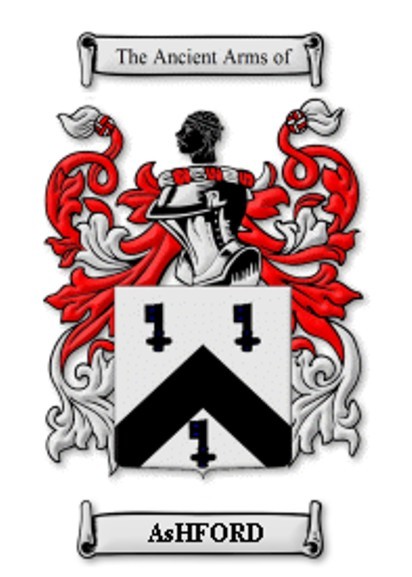
Ashford
The proud ashford family originated in Cornwall, a rugged coastal region in southwestern England. In early times, people were known by only a single name. However, as the population grew and people travelled further afield, it became increasingly necessary to assume an additional name to differentiate between bearers of the same personal name. The manner in which hereditary surnames arose is interesting. Local surnames are derived from where the original bearer lived, was born, or held land. The ashford family originally lived at Ayshford, in Cornwall. The ashford surname was also derived from the Old English words aesc and ford which meant a ford where ash trees grew. Cornish surnames are characterized by a multitude of spelling variations. The frequent changes in surnames are due to the fact that the Old and Middle English languages lacked definite spelling rules. The official court languages, which were Latin and French, were also influential on the spelling of a surname. Since the spelling of surnames was rarely consistent in medieval times, and scribes and church officials recorded names as they sounded rather than adhering to any specific spelling rules, it was common to find the same individual referred to with different spellings of their surname in the ancient chronicles. Moreover, a large number of foreign names were brought into England, which accelerated and accentuated the alterations to the spelling of various surnames. Lastly, spelling variations often resulted from the linguistic differences between the people of Cornwall and the rest of England. The Cornish spoke a unique Brythonic Celtic language which was first recorded in written documents during the 10th century. However, they became increasingly Anglicized, and Cornish became extinct as a spoken language in 1777, although it has been revived by Cornish patriots in the modern era. The name has been spelled Aishford, Ashford, Ayshford, Aysford, Asford, Asseford and many more. First found in Ayshford, in the county of Cornwall, and in the County of Devon, from earliest times, and in later years a branch of the family migrated eastward to Kent. There are at least two references to the name in the Domesday Book: Aisseford and Aiseforda. Both were listed in Devon.
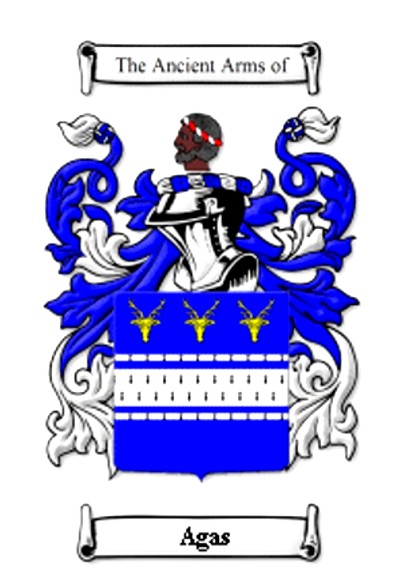
Agas is an ancient Anglo-Saxon surname that came from the baptismal name for the son of Agace. Agas has been recorded under many different variations, including Haggas, Haggis, Hagis, Hagass, Haggist, Hagges, Hages, Hagus, Hagase, Aggas, Agas, Aggs, Agace, Agus and many more.
 |
The titles of Earl of Hertford and Marquess of Hertford have been created several times in the peerages of England and Great Britain.
The third Earldom of Hertford was created in 1559 for Edward Seymour, who was simultaneously created Baron Beauchamp of Hache. His grandson William Seymour was subsequently created Marquess of Hertford and restored to the title of Duke of Somerset; the Marquessate became extinct in 1675 and the other three titles in 1750.
The present Marquessate was created in 1793. Lord Hertford holds the subsidiary titles of Earl of Yarmouth (Peerage of Great Britain, 1793), Earl of Hertford (Peerage of Great Britain, 1750), Viscount Beauchamp (Peerage of Great Britain, 1750), Baron Conway, of Ragley in the County of Warwick (Peerage of England, 1703), and Baron Conway of Killultagh, of Killultagh in the County of Antrim (Peerage of Ireland, 1712). Lord Hertford's heir uses the style Earl of Yarmouth.
The Marquesses of Hertford are members of the Seymour family headed by the Duke of Somerset. Francis Seymour (1679–1732) was the fourth son of Sir Edward Seymour of Berry Pomeroy, 4th Baronet, a descendant of Edward Seymour, 1st Duke of Somerset (Sir Edward's grandson Sir Edward Seymour, 6th Baronet, of Berry Pomeroy succeeded as 8th Duke of Somerset in 1750). Upon the death of his elder brother, Francis succeeded to the estates of his relative Edward Conway, 1st Earl of Conway. In 1703 he was created Baron Conway in the Peerage of England and assumed the additional surname of Conway. In 1712 he was created Baron Conway of Killultagh in the Peerage of Ireland. In 1750 his son Francis Seymour-Conway, 2nd Baron Conway, was created Viscount Beauchamp and Earl of Hertford. These were revivals of titles previously held by the Dukes of Somerset, which had become extinct the same year on the death of Seymour-Conway's kinsman Algernon Seymour, 7th Duke of Somerset. In 1793 he was further honoured when he was made Earl of Yarmouth and Marquess of Hertford. The latter title had also previously been held by the Dukes of Somerset, but had become extinct in 1675 (see below). As a descendant of Edward Seymour, 1st Duke of Somerset, the present Marquess of Hertford is in remainder to the Dukedom of Somerset and its subsidiary title the Barony of Seymour. The family seat is Ragley Hall, near Alcester, Warwickshire.
 |
Dictionary of national biography
|
IVES, JEREMIAH (^. 1653-1674), and against quakers and Sabbatarians. For Erove some oaths lawful, though not all. He published: 1. 'Infants-baptism Dis- 8. ' The Great Case of Conscience opened 9. ' A Contention for Truth,' &c., 1672, 4to 10. 'A Sober Request,' &c., 1674 (broadside; [Sewel's Hist, of the Quakers, 1725, pp. 504
|
IVES, JOHN (1751-1776), Suffolk herald In 1772 he had nine wooden plates cut of In imitation of Horace Walpole (to whom,
|
 |
 |
|
Silius Titus (1623–1704), of Bushey, was an English politician, captain of Deal Castle, and Groom of the Bedchamber to King Charles II. Colonel Titus was an organiser in the attempted escape of King Charles I from Carisbrooke Castle.
Once again, when Charles II offered to impose limitations on a Roman Catholic Church sovereign rather than exclude his brother from the throne, Titus likened such a plan to "having a lion in the lobby and then voting to secure ourselves by letting him in and chaining him, rather than by keeping him out". Titus also served King James II but later transferred his allegiance to William III. During his life he held a number of royal appointments. |
Sir Jean III de Grailly, Captal de Buch KG (d. Paris, 7 September 1376), son of Jean II de Grailly, Captal de Buch, Vicomte de Benauges, and Blanch de Foix,[2] was a cousin of the Counts of Foix and a military leader in the Hundred Years' War who was praised by the chronicler Jean Froissart as an ideal of chivalry. Attached to the English side in the conflict, he was made Count of Bigorre by Edward III of England, and was also a founder and the fourth Knight of the Garter in 1348.[3] He played a decisive role as a cavalry leader under Edward, the Black Prince in the Battle of Poitiers (1356), with de Buch leading a flanking move against the French that resulted in the capture of the king of France (John II), as well as many of his nobles. John was taken to London by the Black Prince and held to ransom.
|
 |
Germany, Austria, Italy.
The Pucci family was a major political family in Florence. The family surname derives from an ancestor named Jacopo, abbreviated to Jacopuccio, then to Puccio, who was considered wise and frequently called upon to settle disputes - there are records of two such interventions in 1264 and 1287. Their former surname seems to have been Saracini, which explains the presence of a maure or moor's head on their crest and coat of arms. (Albino race conjecture and obfuscation).
 |
The first Pucci family members to be mentioned date to the 13th century with their subscribing to the Arte dei Legnaioli. These early members include Antonio Pucci, who worked as an architect on the construction of the Loggia della Signoria. His son Puccio Pucci was a merchant who became rich thanks to trade and financial activities in medieval Florence. The first Pucci residences were in the Santa Croce district of Florence, before they moved to that of the church of San Michele Visdomini. They were Guelphs and so they were expelled and their houses demolished after the battle of Montaperti in 1260, though they were soon able to return upon the Ghibellines' expulsion from the city. With wealth came political offices such as magistracies, priors and gonfalonieres - the Pucci family produced a total of 23 priors 8 holders of the post of confaloniere di giustizia.
Constant allies of the Medici during the Renaissance, the Pucci were among the families Cosimo de'Medici called upon as a means of indirectly pursuing his own political interests - trusted Medici allies from the Pucci family included Puccio Pucci, who provided Cosimo with money to improve his living conditions in prison whilst Cosimo was imprisoned prior to being exiled. In the early 16th century the Pucci family's prestige rose yet higher, with it producing three cardinals (Roberto, Lorenzo and Antonio Pucci) within a few decades of each other and continuing to be trusted figures in the Medici's ducal and then grand-ducal courts.
 |
However, a momentary bitter break with the Medici came in 1559 when Pandolfo Pucci was ousted from the court of Cosimo I for various slanderous accusations of immorality or (according to other sources) for dreaming of restoring the ancient Republic of Florence. Thus, for revenge or ideological reasons, he conspired against Cosimo with the support of other noble Florentine families, intending to fire an arquebus at Cosimo as he and his retinue walked along the corner of Palazzo Pucci and Via de' Servi to get to Santissima Annunziata. The plan had already been shelved, but the Medici intelligence network got wind of it, Pandolfo was hung from a window of the Bargello and the Pucci's properties were seized. As a memorial to the quashing of the plot, or perhaps out of prudence or superstition, it was decided to brick up the window at the corner where the attack was to have occurred, as can still be seen. The Pucci later made peace with the Medici and Niccolò Pucci regained the Palazzo Pucci and its furnishings.
 |
In 1662 Orazio Roberto Pucci acquired the fiefdom of Barsento (Bari) for 4,000 scudi and obtained the title of Marchese di Barsento, the noble title which has since been handed down through the family. The most recent notable family member has been Emilio Pucci, founder of the eponymous post-war fashion house, who became famous (above all in the 1960s and 70s) for more and more fancy but still refined designs. He designed the traditional uniform of the Italian Vigili Urbani with large white gloves and oval beret. His brother Puccio Pucci was also notable, as a sports official for CONI and other organisations. In the 1960s the two brothers split the Palazzo Pucci between them, with Emilio taking the left hand half as the main base for his fashion house and Puccio rebuilding the interior of the central part as a commercial gallery with small craft shops, as it still is today.
In 1404 Antonio di Puccio Pucci acquired the chapel of San Sebastiano in the church of Santissima Annunziata, in which he placed the precious Piero del Pollaiolo painting of the Martyrdom of Saint Sebastian (now in the National Gallery, London). Puccio Pucci bought the Cappella della Madonna del Soccorso a few decades later.
The family palazzo still contains one of the four paintings commissioned by Lorenzo the Magnificent from Sandro Botticelli as a gift to Giannozzo Pucci on Giannozzo's marriage to Lucrezia Bini in 1483. These paintings tell the story of Nastalgio degli Onesti and the first three in the narrative are now in the Prado in Madrid. The painting still in Florence shows the use of forks, which were traditionally adopted for the first time in Florence by the Pucci and whosa use Catherine de'Medici then spread right across Europe. It also shows the use of precious tableware and silver vessels, which really existed and were said to be from the workshops of Verrocchio and Pollaiolo.
The Pucci commissioned several works for the churches neighbouring their palazzo. For the church of San Michele Visdomini, in 1518 Francesco Pucci commissioned Pontormo to paint the Holy family with saints, which was described by Vasari as one of the best paintings by an empolese painter. Whilst he was archbishop of Bologna, cardinal Antonio Pucci commissioned Raphael to paint a scene of The Ecstasy of Saint Cecilia - now moved to the city's Pinacoteca. At the end of the 16th century Lorenzo Pucci commissioned Alessandro Allori to paint a Marriage at Cana as an altarpiece for the church of Sant'Agata (completed 1600).
 |
The family's palazzo was rebuilt by the grand-ducal architect Bernardo Buontalenti in the second half of the 16th century. Between 1585 and 1595 abbot Alessandro Pucci built the Villa di Bellosguardo, to designs by Giovanni Antonio Dosio - it remained a family property until 1858. The Pucci completed the portico of the church of Santissima Annunziata, in a stylistic unity with the piazza outside (the Pucci device is to be seen on the pavement in front of the entrance and on both sides of the portico) - an inscription on the frieze and a plaque on Via Gino Capponi gives its completion date as 1601.
 |
English Translation of the German text accompanying the above portrait: Acquisition memo 1811th Note: since the book has supplements from as late as the 19th century, it was most certainly written no earlier than the 1800s. The date of the paintings is probably just another Vile albino lie, as they too are probably from the 1800s. Therefore there is no telling if the Fuggers of the 1500s were Black, Mulattoes, or Albinos. All that is certain is that Ursula was Black and the families benefactor Queen was Black. |
Bio of Ursula Freiin von Harrach (Fugger)
Birthdate: 1522 Immediate Family: Daughter of Leonhard III. von Harrach and Barbara von Gleinitz |
 |
Most of the family crests of individual Fuggers, (at least 10), have this Queen in the shield as below: This seems to suggest that the families wealth was granted by this Black queen. So far - unable to identify the Black Queen. Also, no way of knowing if this Fugger was actually an Albino.
 |
From The Fugger family wiki:
The Fugger family is a German family that was a historically prominent group of European bankers, members of the fifteenth and sixteenth-century mercantile patriciate of Augsburg, international mercantile bankers, and venture capitalists. Alongside the Welser family, the family controlled much of the European economy in the sixteenth century and accumulated enormous wealth. This banking family replaced the de' Medici family, who influenced all of Europe during the Renaissance. The Fuggers took over many of the Medicis' assets and their political power and influence.
The founder of the family was Johann Fugger, a weaver at Graben, near the Swabian Free City of Augsburg. His son, also called Johann (or Hans), settled in Augsburg, and the first reference to the Fugger family there is his arrival, recorded in the tax register of 1367. He married Klara Widolf and became an Augsburg citizen. After Klara's death, he married Elizabeth Gfattermann. He joined the weaver's guild, and by 1396 he was ranked high in the list of taxpayers. He added the business of a merchant to that of a weaver.
His eldest son, Andreas Fugger, was a merchant in the weaving trade, and was nicknamed "Fugger the Rich" after buying land and other properties. The Fugger family itemized and inventoried a large number of Asian rugs, an unusual undertaking at the time. Andreas's son, Lucas Fugger, was granted arms by the Emperor Frederick III, a golden deer on a blue background, and he was soon nicknamed "the Fugger of the Deer". He was too ambitious, however, and went bankrupt.
Hans Fugger's younger son, Jakob the Elder, founded another branch of the family. This branch progressed more steadily and they became known as the "Fuggers of the Lily" after their chosen arms of a flowering lily on a gold and blue background. Jakob was a master weaver, a merchant, and an alderman. He married Barbara Basinger, the daughter of a goldsmith. His fortune progressed, and by 1461, he was the twelfth richest man in Augsburg. He died in 1469.
Jakob's eldest son, Ulrich, took over the business on his father's death, and in 1473 he provided new suits of clothes to Frederick, his son Maximilian I, and his suite on their journey to Trier to meet Charles the Bold of Burgundy and the betrothal of the young prince to Charles's daughter Maria. Thus began a very profitable relationship between the Fugger family and the Habsburgs. With the help of their brother in Rome, Markus, Ulrich and his brother George handled remittances to the papal court of monies for the sale of indulgences and the procuring of church benefices. From 1508 to 1515 they leased the Roman mint. Ulrich died in 1510.
When the Fuggers made their first loan to the Archduke Sigismund in 1487, they took as security an interest in silver and copper mines in the Tirol. This was the beginning of an extensive family involvement in mining and precious metals. The Fuggers also participated in mining operations in Silesia, and owned copper mines in Hungary. Their trade in spices, wool, and silk extended to almost all parts of Europe.
Ulrich's youngest brother Jakob Fugger (illustration by Albrecht Dürer, below), born in 1459, was to become the most famous member of the dynasty. In 1498 he married Sibylla Artzt, Grand Burgheress to Augsburg, the daughter of an eminent Grand Burgher of Augsburg (German Großbürger zu Augsburg). They had no children, but this marriage gave Jakob the opportunity to elevate to Grand Burgher of Augsburg and later allowed him to pursue a seat on the city council (Stadtrat) of Augsburg. He was elevated to the nobility of the Holy Roman Empire in May 1511, and in 1519, led a consortium of German and Italian businessmen that loaned Charles V 850,000 florins (about 95,625 oz(t) of gold) to procure his election as Holy Roman Emperor over Francis I of France.[5] The Fuggers' contribution was 543,000 florins.
In 1494 the Fuggers established their first public company. Jakob's aim was to establish a copper monopoly by opening foundries in Hohenkirchen and Fuggerau (named for the family, in Carinthia) and by expanding the sales organization in Europe, especially the Antwerp agency. Jakob leased the copper mines in Neusohl (Besztercebánya, today Banská Bystrica, Slovakia) in 1495, eventually making them the greatest mining centre of the time.
At the height of his power Jakob Fugger was sharply criticized by his contemporaries, especially by Ulrich von Hutten and Martin Luther, for selling indulgences and benefices and urging the Pope to rescind or amend the prohibition on the levying of interest. The imperial fiscal and governmental authorities in Nuremberg brought action against him and other merchants in an attempt to halt their monopolistic tendencies.
 |
In 1511, Jakob deposited 15,000 florins as an endowment for some almshouses. In 1514, he bought up part of Augsburg and in 1516 came to an agreement with the city that he would build and provide a number of almshouses for needy citizens. By 1523, 52 houses had been built, and the Fuggerei had come into existence. It is still used today. Jakob died in 1525. He is considered to be one of the richest persons of all time, and today he is well known as Jakob Fugger "the rich".
Jakob's successor was his nephew Anton Fugger, son of his elder brother Georg. Anton was born in 1493, married Anna Rehlinger, and died in 1560. In 1525 the Fuggers were granted the revenues from the Spanish orders of knighthood together with the profits from mercury and silver mines. The formerly rich yield of the Tirolean and Hungarian mines decreased, but Anton established new trade ties with Peru and Chile and started mining ventures in Sweden and Norway. He was involved in the slave trade from Africa to America, but was more successful in the spice trade and the importation of Hungarian cattle. Eventually, he was forced to renounce the Maestrazgo lease after 1542 and to give up the silver mines of Guadalcanal (Spain).
Anton's oldest son, Markus, carried on the business successfully and during the period 1563–1641, earning some 50,000,000 ducats from the production of mercury at Almadén alone, but the Fugger company was completely dissolved after the Thirty Years' War. The burial chapel of the Fuggers in St. Anne's Church, Augsburg is the earliest example of Renaissance architecture in Germany. In Augsburg, a museum of Fugger and Welser history (Fugger und Welser Erlebnismuseum) was opened.
 |
 |
 |
 |
of which there are perhaps hundreds, even thousands, as All European countries have Crests with Black Kings or other such imagery.
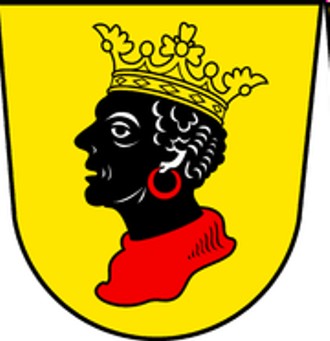 |
 |
 |
||
Coat of the Bishop of Freising |
Arms of Illerkirchberg - a town in the district of Alb-Donau in Baden-Württemberg in Germany. |
Coat of Oberkirchberg Germany |
 |
 |
 |
||
Coat of sub Kirchberg |
Crest of the district Garmisch - Partenkirchen |
Crest of Eching - a municipality in the district of Freising, in Upper Bavaria, Germany. |
 |
 |
 |
||
Crest of Enzersdorf ( Lower Austria ) |
Crest of Fahrenzhausen - a municipality in the district of Freising in Bavaria in Germany. | Crest of Garmisch-Partenkirchen, a district in Bavaria, Germany. |
 |
 |
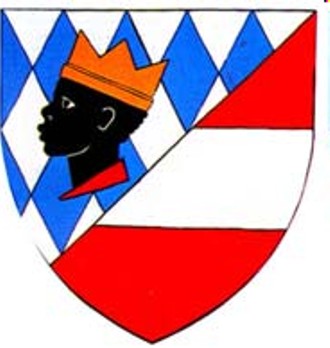 |
||
| Crest of Huisheim, a municipality in the district of Donau-Ries in Bavaria in Germany. | Coat of the municipality Mittenwald (district Garmisch - Partenkirchen Germany) | Coat of Neuhofen at the Ybbs (Lower Austria) |
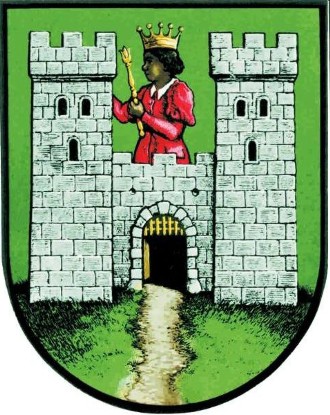 |
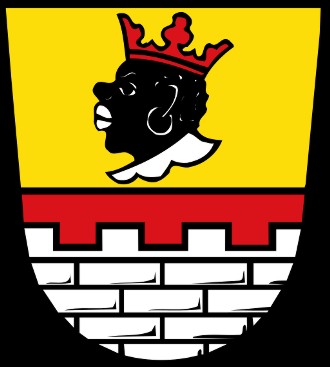 |
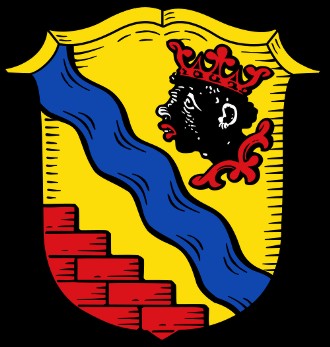 |
||
| Crest of Oberwölz Stadt, a town in the district of Murau in the Austrian state of Styria | Coat of the Municipality of Pastetten (district of Erding) | Crest of Unterföhringer (Munich) |
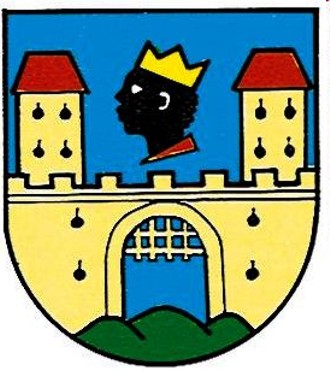 |
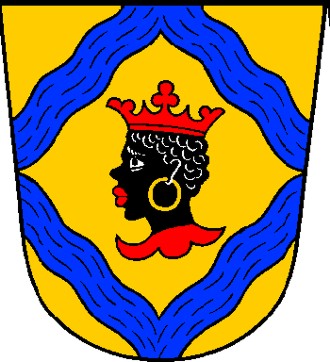 |
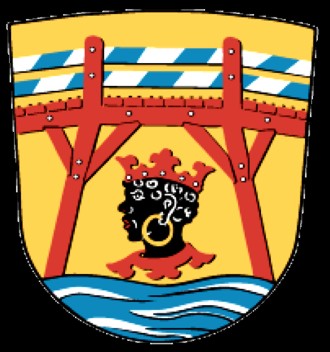 |
||
| Coat of Waidhofen on the Ybbs (Lower Austria) | Coat of the municipality of Wörth (Landkreis-Erding) | Coat the municipality of Zolling (Freising) |
 |
 |
 |
 |
 |
| < Back | Home | Next > |