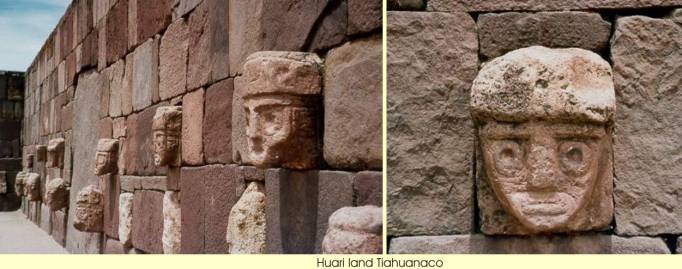
At about 1,000 A.D, the Lima culture began to take shape along the central Peruvian coast, the Lima are known for their painted adobe buildings. Sometime later, the Lima were conquered by the Huari (Wari) people. Like the Moche before them, the Huari were a warrior society that appreciated fine artistry and design. Coastal Huari cultures produced textiles of the highest quality. Their ceramics, although less refined than those of Tiwanaku, stressed solid construction, bold design, and a rich use of colors.
Later, Huari was the center of a militaristic Empire that dominated much of the Peruvian highlands and coastal region during the early part of the Middle Horizon. The Huari shared a religion and iconography with the Tiwanaku, but were socio-economically separate. Between about 750 and 1000 A.D, the Huari Empire unified all of Peru.
|
For reasons unknown, Huari and its large urban centers like Cajamarquilla, collapsed at around 800 A.D. This marks the end of urban life in southern Peru - until the Inca arrive. Curiously though, at the same time, urban centers are starting to pop-up on the northern coast of Peru, at the sites of future cities such as Chan Chan, Pacatnamú, and others.
 |
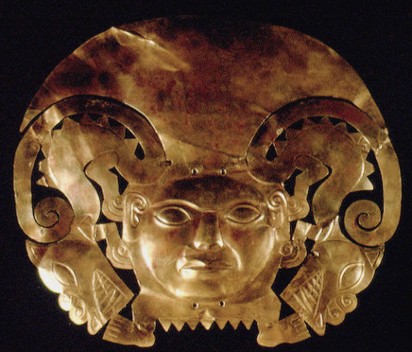
The kingdom of the Chimu, was the first mega-state in Peru, before the establishment of the Inca Empire. It reached the height of its power in the fifteenth century, not long before being conquered by the Incas. The Chimú state originated in the Moche Valley, where its capital Chan Chan lay. The center of this great city is divided into nine walled "citadels," each constructed out of adobe brick finished with mud, and each containing temples, cemeteries, gardens, reservoirs and symmetrically arranged rooms. These citadels it is believed, were the living quarters, burial places and warehouses of the aristocracy. The bulk of the city's population however, lived outside of the citadels in much more modest quarters. There were other Chimu cities at Farfán and Pacatnamú in the Pacasmayo Valley, and at Purgatorio and Apurlé in the Leche and Motupe valleys. Chan Chan, now largely destroyed, once produced a spectacular array of artistic works such as gold jewelry, feather mantles, great textiles, and considerable work in wood and clay. The arid climate has preserved more art from the Chimú region than from most others.
 |
Like all other great civilizations, the Chimu were militaristic and expansionistic. However in their quest for more territory, they unfortunately ventured south, and ran into the Inca. The Chimu conflict with the Inca began in 1462, and by 1475-1476 A.D, it was over, the Inca had conquered the Chimu state. The entire Chimu state, was absorbed into the Tawantinsuyu community and resettled in the city of Cuzco, to serve their new Inca rulers.
Contemporary with the Chimú, were the Chincha, on the southern coast of Peru. They were a similarly well-organized state. But they were unique in one respect, it appears that they were a completely specialized people, oriented totally towards a fishing economy. Excess from fishing and marine gathering was then used to barter for other goods.
The Chinchorro culture of South America was a preceramic culture that lasted from (7,000 to 1,500 B.C). The people forming the Chinchorro culture were sedentary fishermen inhabiting the Pacific coastal region of current northern Chile and southern Peru. Presence of fresh water in the arid region on the coast facilitated human settlement in this area.
 |
The Chinchorro were expert fishermen. They developed an extensive and sophisticated fishing tool assemblage. The people had efficient fishing gear, such as fishing hooks made of shells and cactuses, and stone weights for nets made of mesh fabrics. They became skilled weavers of baskets and mats. While most Chinchorro sites are located on the coast, some are also found inland and in the nearby highlands. Their lifestyle was predominantly supported by fish, shellfish and sea mammals. There are some large coastal middens that have been excavated. Analysis of the hair and human bones from the mummies indicates that about 90 percent of their diet existed of maritime food sources, with the remaining 10 percent of their food from terrestrial animals and plants. The Chinchorro type site is located in Arica, Chile: it was discovered by German archaeologist Max Uhle in 1915.
 |
The Chinchorro mummies are mummified remains of individuals from the South American Chinchorro culture, found in what is now northern Chile. They are the oldest examples of artificially mummified human remains, becoming popular by up to two thousand years before the Egyptian mummies. While the earliest mummy that has been found in Egypt dated around 3,000 B.C, the oldest anthropogenically modified Chinchorro mummy dates from around 5,050 B.C. The oldest naturally mummified mummy recovered from the Atacama Desert is dated around 7,020 B.C.
 |
29% of the Chinchorro mummies found thus far were results of the natural mummification process. The earliest such mummy dates to 7,020 B.C, and is known as 'Acha man'. The artificial mummies of Chinchorro are believed to have first appeared around 5,000 B.C, and reached a peak around 3,000 B.C. Often Chinchorro mummies were elaborately prepared by removing the internal organs and replacing them with vegetable fibers or animal hair. In some cases an embalmer would remove the skin and flesh from the dead body and replace them with clay. Radiocarbon dating reveals that the oldest discovered anthropogenically modified Chinchorro mummy was that of a child from a site in the Camarones Valley, about 60 miles (97 km) south of Arica in Chile and dates from around 5,050 B.C. The mummies continued to be made until about 1800 B.C, making them contemporary with Las Vegas culture and Valdivia culture in Ecuador and the Norte Chico civilization in Peru.
 |
The mummies may have served as a means of assisting the soul in surviving, and to prevent the bodies from frightening the living. A more commonly accepted theory is that there was an ancestor cult of sorts, since there is evidence of both the bodies traveling with the groups and placed in positions of honor during major rituals, and a delay in the final burial itself.
Also, the bodies (which were always found in the extended position) were elaborately decorated and colored (even later repainted), and are thought to be reinforced and stiffened in order to be carried on reed litters and consequently displayed. However, since the society is a preceramic one, as well as slightly nomadic, it is somewhat difficult to determine through archaeological records the reasons why the Chinchorro felt the need to mummify the dead. DNA = The representatives of the Chinchorro culture was determined by mitochondrial haplogroup A2.
 |
While the overall manner in which the Chinchorro mummified their dead changed over the years, several traits remained constant throughout their history. In excavated mummies, archaeologists found skin and all soft tissues and organs, including the brain, removed from the corpse. After the soft tissues had been removed, sticks reinforced bones while the skin was stuffed with vegetable matter before reassembling the corpse. The mummy received a clay mask even if the mummy was already completely covered in dried clay; a process which the body was wrapped in reeds left to dry out for 30 to 40 days. Archaeologists have agreed upon the following types of mummification: Natural, Black, Red, Mud-coated and Bandage mummies. The two most common techniques used in Chinchorro mummification were the Black mummies and the Red mummies.
Of the 282 Chinchorro mummies found thus far, 29% of them were results of the natural mummification process (7020 BC-1300 BC). In northern Chile, environmental conditions greatly favor natural mummification. The soil is very rich in nitrates which, when combined with other factors such as the aridity of the Atacama Desert, ensure organic preservation. Salts halt bacterial growth; the hot, dry conditions facilitate rapid desiccation, evaporating all bodily fluids of the corpses. Soft tissues, as a result, dry before they decay and a naturally preserved mummy is left. What must also be noted is that even though the Chinchorro people did not mummify the bodies artificially, the bodies were still buried wrapped in reeds with grave goods.
The black mummy technique (5000 to 3000 BC) involved taking the dead person's body apart, treating it, and reassembling it. The head, arms, and legs were removed from the trunk; the skin was often removed, too. The body was heat-dried, and the flesh and tissue were completely stripped from the bone by using stone tools. Evidence exists that the bones were dried by hot ashes or coal. After reassembly, the body was then covered with a white ash paste, filling the gaps with grass, ashes, soil, animal hair and more. The paste was also used to fill out the person's normal facial features. The person's skin (including facial skin with a wig attachment of short black human hair) was refitted on the body, sometimes in smaller pieces, sometimes in one almost-whole piece. Sea lion skin was sometimes used as well. Then the skin (or, in the case of children, who were often missing their skin layer, the white ash layer) was painted with black manganese giving their color.
 |
The red mummy technique (2500 BC to 2000 BC) was a technique in which rather than disassemble the body, many incisions were made in the trunk and shoulders to remove internal organs and dry the body cavity. The head was cut from the body so that the brain could be removed, after which the skin would be pasted back on, which would often just be covered with a clay mask. The body was packed with various materials to return it to somewhat more-normal dimensions, sticks used to strengthen it, and the incisions sewn up using reed cord. The head was placed back on the body, this time with a wig made from tassels of human hair up to 60 cm long. A "hat" made out of black clay held the wig in place. Except for the wig and often the (black) face, everything was then painted with red ochre.
The final style of Chinchorro mummification was the mud-coat (3000-1300 BC). Ecologically speaking, at the time of the Chinchorro culture the region was relatively stable. It has been suggested by environmentalists that the incredible preservation of these mummies is also influenced by the pedogenic (the evolution of soil) creation of clays and gypsum, which act as cementing agents, and the latter as a natural desiccant. The malleable clay allowed for the morticians to mold and create the colorful appearances of mummies, with the added bonus of the fact that the foul smell of the desiccating mummy would be covered. Artisans no longer removed the organs of the dead; instead a thick coat of mud, sand and a binder like egg or fish glue was used to cover the bodies. Once completed the mummies were cemented into their graves. The change in style may have come from exposure to outsiders and their different cultures, or from the association of disease with the rotting corpses.
The bandage technique (guessed to be 2620-2000 BC, but there is a lack of radiocarbon dating) has only been found to be present in three infants. The technique is a mixture of black and red mummies, in that the body was taken apart and reinforced in the style of black mummies but the head was treated in the same way as red mummies are. Animal and human skin was used to wrap the body in the place of clay. Further, the bodies were found to be painted with red ocher while the heads were painted with black manganese.
At least one Chinchorro mummy bears remarkable witness to the antiquity of tattooing in the region. Indeed, the remains of a male with a mustache-like dotted line tattooed above his upper lip and dating to 1880 B.C, is believed to represent the oldest direct evidence of tattooing in the Americas and the fourth-oldest such evidence in the world.
"Poison-laced" drinking water killed some of the world's oldest mummies, which are found in the harsh northern deserts of Chile. Arsenic, which occurs in high levels in drinking water in Chile's northern Camarones Valley: it is this deadly element that likely poisoned the coastal Chinchorro people for centuries, starting at least 7,000 years ago, their Mummy-hair analyses show.
Quote: "'I believe these ancient people were continuously exposed to arsenic by drinking contaminated water with high arsenic levels: that contaminated water is endemic to the Camarones region,' said study leader Bernardo Arriaza of Chile's Universidad de Tarapacá de Arica.""The Chinchorro, who wouldn't have been aware they were ingesting the tasteless and invisible toxin, may have suffered from skin, lung, bladder, and kidney cancers, among other serious effects of long-term arsenic exposure." Archeology News, MesoAmerica.
CautionPlease note: great caution must be used in trying to determine the Race or Ethnic nature of the ancient Chincha people. We know quite well the lying nature of some Albino scientists and academics, and the glaring lack of specifics about the mummies seems to indicate that the Albinos are at it again. As examples: These, the world’s oldest mummies were found over a hundred years ago, yet few people know of their existence. A confirmed picture of 'Acha man' is nowhere to be found currently. Pictures of specific examples of each type of Mummification, is not to be found. Where is the DNA information? |

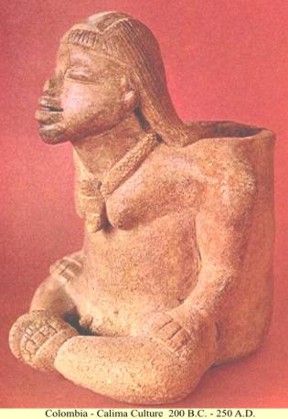
Before going on, we should note that at the same time as these Andean Cultures, and even before them, there was the cultures in the "gateway" to South America, Colombia. Colombia lies at the crossing point between South and Central America. However cultures of Colombia have been little investigated, because almost none of them, left behind spectacular monuments. But their art reveals a high degree of craftsmanship, and their gold-work is the best in the whole continent, both for their techniques and artistic design. Their notable sites were San Agustín, Tierradentro and Ciudad Perdida. The cultures are known as the Tayrona, Sinú, Muisca, Quimbaya, Tolima, Calima,Tierradentro, San Agustín, Nariño, and Tumaco.
Continuing on in Peru: Sicán (800-1375) A.D, was a society of farmers, ceramic artisans, fishermen, and metalworkers. They built brick (adobe) platform mounds for ceremonial and funerary purposes. Like their Moche precursors, the people of Sicán built monumental temples and palaces, where rituals and funerals demanded splendid paraphernalia. The people of Sicán built highly refined irrigation projects, which opened the desert to richly productive agriculture. Their region, a broad river valley extending some 25 miles between the Pacific Ocean and the Andean foothills, is called Batán Grande.
 |
The lords of the Sicán civilization, were buried in deep tombs, lying at the bottom of vertical shafts. In 1995 Izumi Shimada, excavated one of the richest tombs ever found in the western hemisphere. It contained more than a ton of precious metal shaped as jewelry, and other ritual artifacts. These objects show the highly perfected techniques achieved by Sicán gold and silver smiths.
The Inca, who called themselves the Tawantinsuyu - ruled an empire extending from Ecuador to central Chile, their capital was called Cuzco/Cosco. The Inca were a Peruvian highland warrior people. The king of the Inca Empire was called the Sapa Inca (emperor), or simply Inca.
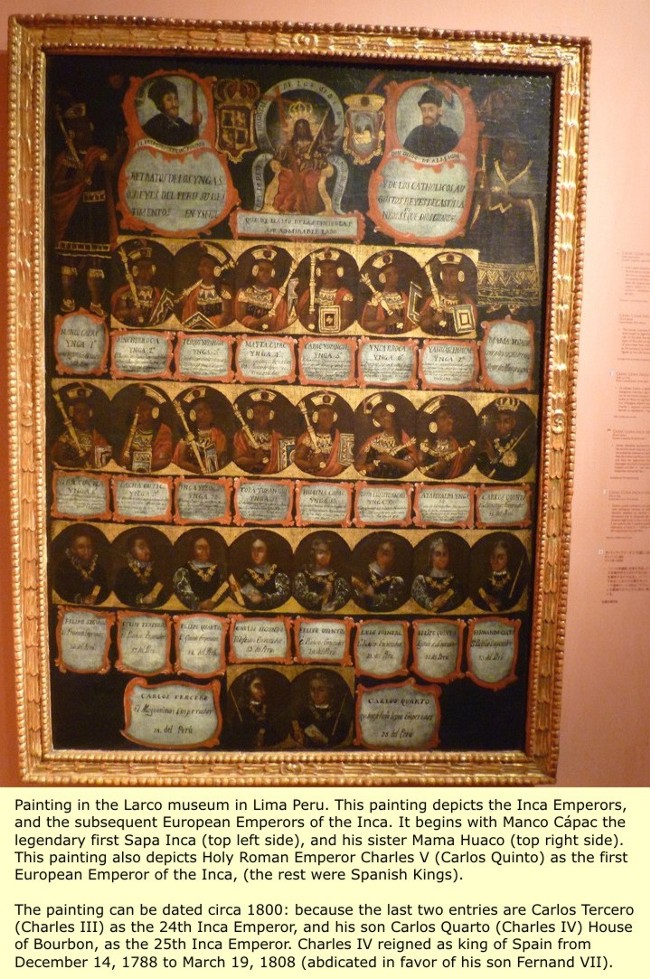
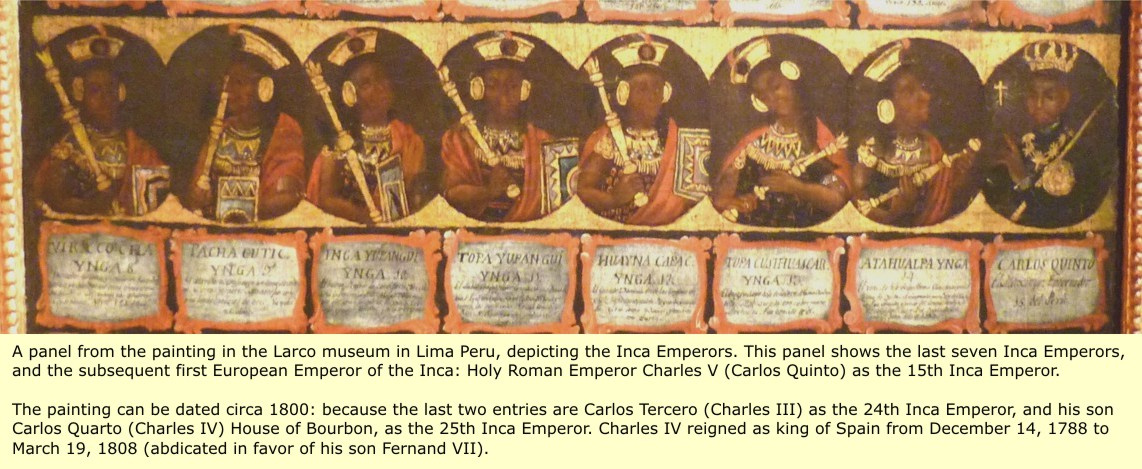
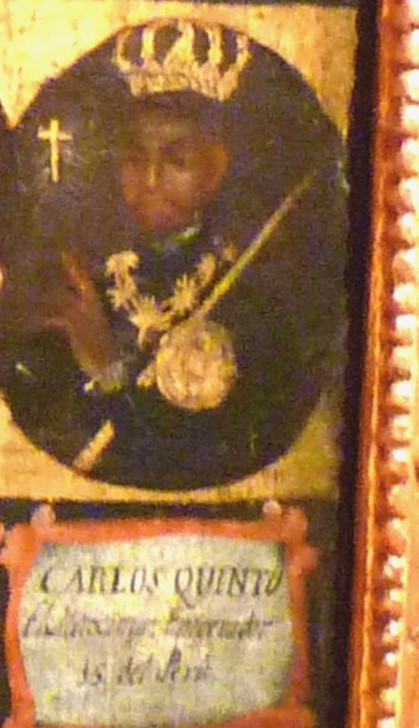
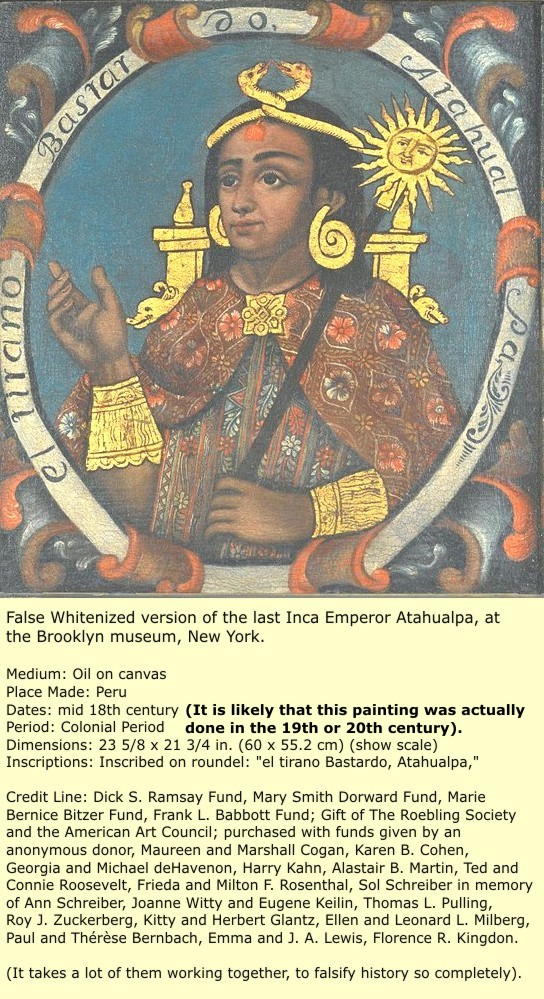
The race of the Inca, as well as the Holy Roman Emperors, who later came to rule them during the reign of Charles V, has long been in contention. Two old paintings with provenance in Peru, answers both questions definitively.
 |
 |
 |
 |
 |
 |
 |
 |
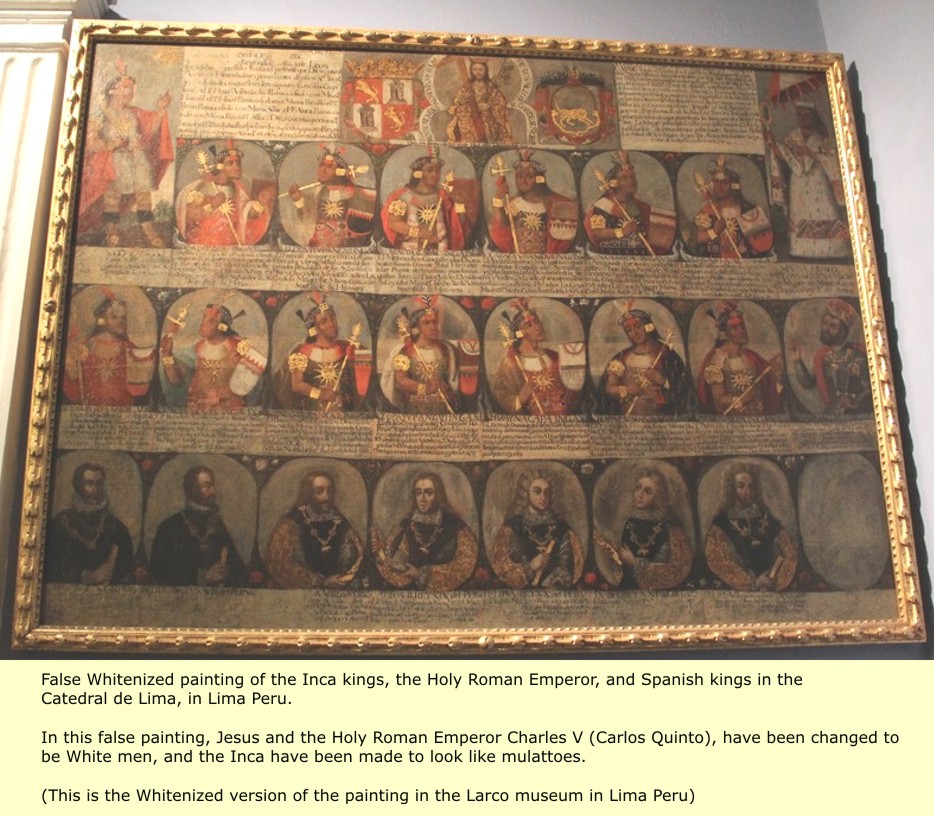 |
Click here for blowup of entire painting
Jesus Before |
Jesus After |
|
 |
 |
Emperor Charles V Before |
Emperor Charles V After |
|
 |
 |
 |
 |
 |
 |
See Charles V in the Black Holy Roman Empire Section.
This is a drawing of the Black rulers of Peru, and the other parts of the Inca Empire the first Europeans encountered. Do they look Mongol or White or Mulatto? (The book has many other drawings showing that the original American Hemisphere rulers were all Black). The Albinos fantasy of creating a fake history where they were important participants or rulers is slowly falling apart. So far, they still hold on to the lie that their Mulattoes were the original people, but that too is being disproved. Note the sad saga of United States Senator Elizabeth Warren. |
 |
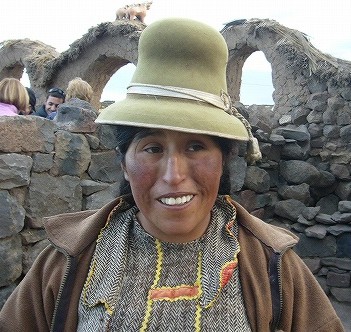
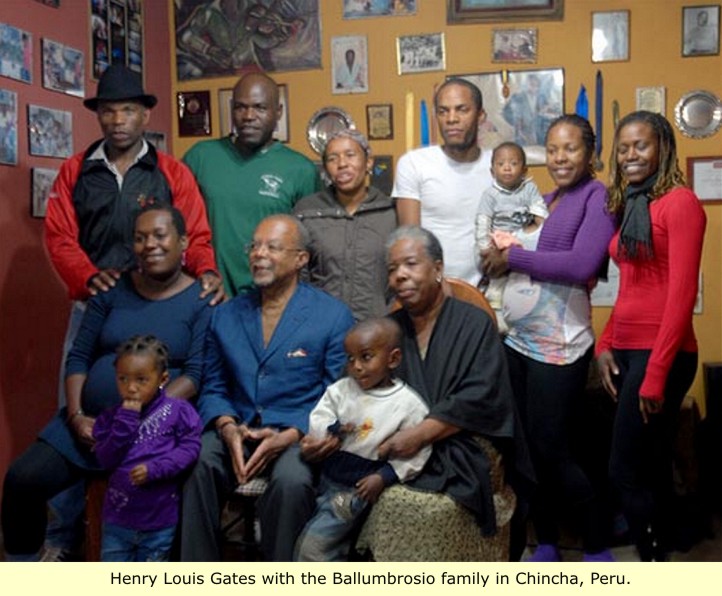
Lovely Black Peruvian women in Chincha Peru - Picking Cotton |
 |
 |
 |
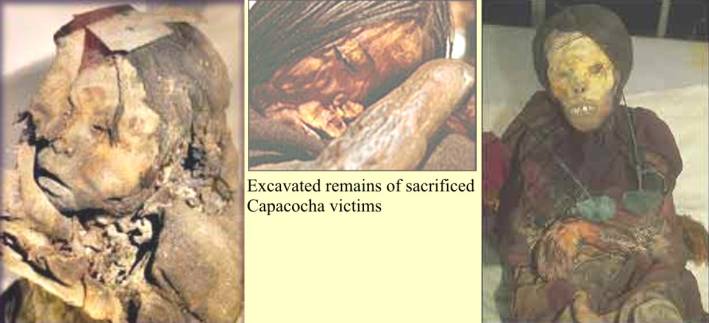 |
Capacocha is the sacred Inca ceremony of human sacrifice. Sacrifices were often made during or after a calamity such as: an earthquake, an epidemic, a drought, or after the death of an Inca Emperor. The Inca sacrifices often involved the child of a chief. The sacrificed child was thought of as a deity, ensuring a tie between the chief and the Inca emperor, who was considered a descendant of the Sun god. The sacrifice also bestowed an elevated status on the chief's family and descendants. The "honor" of sacrifice was bestowed not only on the family, but was forever immortalized in the child. It is believed that the sacrificial children had to be perfect, without so much as a blemish or irregularity in their physical beauty.
The Uros are a pre-Incan people who live on forty-two self-fashioned floating islands in Lake Titicaca Puno, Peru and Bolivia. The Uros descend from a millennial town that, according to legends, are "pukinas" who speak Uro or Pukina and that believe they are the owners of the lake and water. Uros used to say that they have black blood because they did not feel the cold. Also they call themselves "Lupihaques" (Sons of The Sun). Nowadays, Uros do not speak the Uro language, nor practice their old beliefs but keep some old customs.
 |
 |
 |
 |
The purpose of the island settlements was originally defensive, and if a threat arose they could be moved. The largest island retains a watchtower almost entirely constructed of reeds. The Uros traded with the Aymara tribe on the mainland, intermarrying with them and eventually abandoning the Uro language for that of the Aymara. About 500 years ago they lost their original language. When conquered by the Inca empire, they had to pay taxes to them, and often were made slaves.
 |
 |
 |
 |
 |
 |
 |
 |
 |
 |
 |
 |
 |
 |
 |
 |
 |
 |
Inca technology and architecture were highly developed. Their irrigation systems, palaces, temples, and fortifications can still be seen throughout the Andes. Their economy was based on agriculture, its staples being corn (maize), white and sweet potatoes, squash, tomatoes, peanuts (groundnuts), chili peppers, coca, cassava, and cotton. They raised guinea pigs, ducks, llamas, alpacas, and dogs. Clothing was made of llama wool and cotton. Houses were made of stone or adobe mud. Inca farms were high in the mountains, sometimes over 12,000 feet high. In order to make the best use of all available land, the Inca practiced terrace farming in the high mountains.
 |
 |
Machu Picchu is a 15th-century Inca estate located in the Cusco Region, Urubamba Province, Machupicchu District in Peru. It is situated on a mountain ridge above the Sacred Valley which is (50 mi) northwest of Cuzco and through which the Urubamba River flows. Most archaeologists believe that Machu Picchu was built as an estate for the Inca emperor Pachacuti (1438–1472). It was built about 1450 A.D. and it was abandoned in 1572. Relating to the Incas being painted as "Dark" Blacks: Perú has recorded some of the highest levels of UV rays in the world. People with less than "heavy" pigmentation could not work the "High Altitude" Terrace Farms for very long. The nonsense put forth by the Albinos of light-skinned Incas is just more racist Albino falsification.
|
 |
Because of the varied altitudes that the Inca inhabited, they became expert at using temperature and humidity as a food preservative, (they invented "Jerk" meat). The Inca built a vast network of roads throughout their empire.
 |
There were two main roads, one north to south, running along the coast for about 2,250 miles, the other inland along the Andes for a comparable distance, with many interconnecting roads and links. Many short rock tunnels and vine-supported suspension bridges were also constructed. The Inca Empire was a patchwork of languages, cultures and peoples, naturally those that had been conquered were not loyal.
Cabral was a Portuguese noble, military commander, navigator and explorer regarded as the discoverer of Brazil.
On 15 February 1500, Cabral was appointed Capitão-mor (literally Major-Captain, or commander-in-chief) of a fleet sailing for India. It was then the custom for the Portuguese Crown to appoint nobles to naval and military commands, regardless of experience or professional competence. This was the case for the captains of the ships under Cabral's command—most were nobles like himself. Cabral conducted the first substantial exploration of the northeast coast of South America and claimed it for Portugal. While details of Cabral's early life are sketchy, it is known that he came from a minor noble family and received a good education. He was appointed to head an expedition to India in 1500, following Vasco da Gama's newly opened route around Africa. The object of the undertaking was to return with valuable spices and to establish trade relations in India—bypassing the monopoly on the spice trade then in the hands of Arab, Turkish and Italian merchants.
 |
His fleet of 13 ships sailed far into the western Atlantic Ocean, perhaps intentionally, where he made landfall on what he initially assumed to be a large island. As the new land was within the Portuguese sphere according to the Treaty of Tordesillas, Cabral claimed it for the Portuguese Crown. He explored the coast, realizing that the large land mass was probably a continent, and dispatched a ship to notify King Manuel I of the new territory. The continent was South America, and the land he had claimed for Portugal later came to be known as Brazil. The fleet reprovisioned and then turned eastward to resume the journey to India.
 Francisco Pizarro was born in Trujillo, Estremadura, Spain, probably in 1471. He was the illegitimate son of Gonzalo Pizarro and Francisca González, she paid little attention to his education and he grew up without learning how to read or write. His father was a captain of infantry, and had fought in the Neopolitan war.
In 1522, after having heard accounts of the achievements of Hernán Cortés in Mexico, and with the return of Pascual de Andagoya from his expedition to the southern part of Panama, which had brought news of the countries situated along the west coast of south America. Cortés became filled with enthusiasm for exploration and conquest. He formed together with Diego de Almagro, a soldier of fortune who was at that time in Panama, and Hernando de Luque, a Spanish cleric, a company to conquer the lands situated to the south of Panama. Their project seemed so utterly unattainable that the people of Panama called them the "company of lunatics".
However after many failed attempts, Pizarro finally made it to the Incas territory. By the scoundrels luck, he shows up just as the Inca princes, the brothers Atahuallpa and Huascar, are engaged in a civil war over succession to the throne.
Additionally, there is a smallpox epidemic raging, smallpox having been introduced by Aleixo García, a Portuguese adventurer who had eight years earlier, entered South America through the Río de la Plata Estuary, which divides Argentina and Uruguay. García was intrigued by reports of "the White King" (see below), who it was said, lived far to the west and governed cities of incomparable wealth and splendor. His intention was to plunder Inca territory from the east. In Asunción his group gathered a small army of 2,000 Guaraní warriors to assist the invasion. García became the first European to cross the Chaco, and penetrate the outer defenses of the Inca Empire in the foothills of the Andes Mountains in present-day Bolivia. The García entourage engaged in plundering and amassed a considerable horde of silver. Only fierce attacks by the reigning Inca, Huayna Cápac, {who has since died}, convinced García to withdraw. Indian allies later murdered García and the other Europeans, but news of the raid on the Incas reached the Spanish explorers on the coast and attracted Sebastian Cabot to the Río Paraguay two years later.
 |
 |
 |
Just before Pizarro's arrival, Atahuallpa's armies, led by the able generals Quisquis and Challcuchima, had marched south and won a series of decisive victories at Cajamarca, Bombon, and Ayacucho. As they moved southward, Huascar formed another army to defend Cuzco from the invaders. His forces were defeated, and he was captured a few miles from Cuzco in April 1532. The generals killed his entire family, and fastened them to poles along a highway leading from the capital. They also killed a number of people in Topa Inca Yupanqui's corporation because they had supported Huascar during the civil war; and they burned the mummy of the deceased ruler, which was venerated by the members of this group. Atahuallpa was in the north, setting up his administration, when he learned of the victory. He ordered Challcuchima to bring Huascar to the north so he could insult him properly before being crowned.
Meanwhile, the Spaniards had landed at Tumbes, on the northern coast of Peru early in 1532, and were seeking an interview with Atahuallpa, so that they could kidnap him. It is clear that they understood the nature of the Inca civil war and were dealing with emissaries from both factions. Their actions, however, must have seemed puzzling to Atahuallpa. On the one hand, Pizarro and his men were deposing and executing leaders who were loyal to him, and on the other hand, they were sending messages that recognized him as the legitimate ruler of Tawantinsuyu. As the Spaniards moved toward Cajamarca, he sent them a message indicating that he was now the sole ruler of his father's domain. Furthermore, he reminded the Spaniards that they were far from their base of supply and in a land controlled by his armies. The Spaniards replied to this veiled threat by indicating that they would come to his aid against any group that opposed his rule. Atahuallpa clearly wanted the Spaniards as allies but continually misinterpreted their intentions and underestimated their abilities—even after he was kidnapped in Cajamarca on November 16, 1532.
On 15 November, after a long, distressing journey and without opposition from the Indians, Pizarro entered the city of Caxamalca (now Caxamarca). Atahuallpa was invited into the camp of the Spaniards, the Indian prince presented himself accompanied by his bodyguard but unarmed. At a given signal, the Spaniards rushed upon the unsuspecting Indians, massacred them in the most horrible manner, and took possession of their king. Deprived of its leader the great army that was encamped near Caxamalca, not knowing what to do, retreated into the interior. As the price of his release the Inca monarch offered his captives gold enough to fill the room (22 x 17 feet) in which he was held captive.
Atahuallpa was allowed to meet with his advisers while the Spaniards held him prisoner, and he arranged to have the ransom they demanded paid. An enormous ransom was raised, but Pizarro did not free him because it would have been too dangerous for the Spaniards. While he was in prison, Atahuallpa decided that the Spaniards were indifferent to the idea of having his brother slain and ordered Huascar's death. The Spaniards, of course, wanted all pretenders to authority removed, but later used this act to justify their execution of the Inca ruler. Realizing that Atahuallpa's death was a mistake, because it weakened their position, they approved the coronation of Topa Huallpa, a candidate whom they thought would be acceptable to both Inca factions. But the Spaniards miscalculated. Topa Huallpa had not supported Atahuallpa and, in fact, had been in hiding as long as Atahuallpa was alive. He was supported by Huascar's group and was opposed by Atahuallpa's following, who believed that the legitimate heir was the deceased ruler's son in Lima. With this act, the Spaniards suddenly found themselves closely allied with Huascar's faction and were so viewed by both Inca groups.
Topa Huallpa died within a few months—poisoned, according to Huascar's supporters. At this point, the Spaniards reaffirmed their alliance with Huascar's following, placing Huascar's brother, Manco Inca, on the throne and assisting him in dispersing the remnants of Atahuallpa's army. Although Manco Capac was allowed to rule in Cuzco as a puppet monarch, Spanish abuses forced him to lead an unsuccessful revolt. By 1535 the Inca ruler realized that the Spaniards were more dangerous than any threat posed by the remnants of Atahuallpa's followers. the Inca were eventually driven into a remote mountainous area called Vilcabamba, where Manco Capac established an independent Inca state. There they remained for over thirty years. In 1572, the last of the Inca rulers, Túpac Amaru, was beheaded and Tawantinsuyu officially came to an end. Of course, these great battles were not really fought by the Spanish.
As with the tribes in Mesoamerica, the tribes of South America saw Pizarro and his army as a focal point to rally around, and free themselves from Inca tyranny. It would not be revealing to ask which tribes joined Pizarro, it would be more accurate to ask, which did not! One tribe, upon being faced with the brutal truth, actually tried to sue.
Pizarro had acquired a steadfast ally, the Wanka/Cañaris. It was in their territory Xauxa, that the Europeans established their first capital. Along with thousands of soldiers and bearers, the Canaris provided the newcomers with strategic information, plus the food and weapons stored in hundreds of warehouses built by the Inka and filled locally. In one region where the Inka had managed to cobble together some resistance, known as Huánuco, the Europeans had to call on Canaris troops to help them put down the rebellion. All this assistance provided the Europeans, was recorded with care on a khipu Kept by the Canaris lords. This record was first described by Cieza de León, some fifteen years after the invasion. Such bookkeeping later became evidence submitted at a trial initiated at the vice regal court at Lima, by one of the chief's, who in 1532 had opened the country to the Spanish troops of King Charles V. This indian man, titled don Francisco Cusichac, felt betrayed by the ill treatment of his people and the neglect of his own privileges.
Of course, the tribes soon learned that the Spaniards were not there to free anybody, they were there to plunder and loot. As soon as the Inca were destroyed, the Spanish then turned on the tribes, and one by one they were subdued. In the Americas, the lack of Native American metal artifacts is due to the fact that the spanish melted down and carried away, everything that they could find. After all the booty had been taken, the Spanish turned to farming and mining to generate wealth. The Indians were then enslaved to work the farms and mines. Here again: killing, slavery and disease due to overwork and malnutrition (Not European disease), wiped out much of the population.
| Francisco Brandao Gomes: Activist for the independence of Brazil. After independence was proclaimed, he took the name "Ge Francisco Acayaba of Montezuma" the name thus incorporating all the elements that form the Brazilian nation, and a tribute to the Aztec Emperor Montezuma |
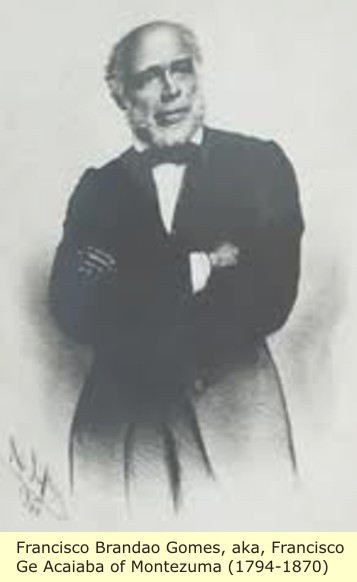 |
 |
 |
Conquest of the AmericasDid it really come about because of a local Race War? |
by Walter A. Neves and Mark Hubbe
Laboratório de Estudos Evolutivos Humanos, Departamento de Genética e Biologia Evolutiva, Instituto de Biociências, Universidade de São Paulo, 05508-090 São Paulo, Brazil.
Abstract
Comparative morphological studies of the earliest human skeletons of the New World have shown that, whereas late prehistoric, recent, and present Native Americans tend to exhibit a cranial morphology similar to late and modern Northern Asians (short and wide neurocrania; high, orthognatic and broad faces; and relatively high and narrow orbits and noses): the earliest South Americans tend to be more similar to present Australians, Melanesians, and Sub-Saharan Africans (narrow and long neurocrania; prognatic, low faces; and relatively low and broad orbits and noses).
The enslavement of Africans in the Spanish Americas began in 1502 and was finally outlawed in 1716 in all colonies with the exceptions of Cuba and Puerto Rico, where it remained in a semi-legal state until it was finally abolished 1866 and 1863 respectively. Native slavery was prohibited during the first half of the sixteenth century, although some enslavement continued under the guise of just war. Most of the earliest black immigrants to the Americas were born in Spain and were not slaves, men such as Pedro Alonso Niño, a navigator who accompanied Christopher Columbus on his first voyage, and the black colonists who helped Nicolás de Ovando form the first Spanish settlement on Hispaniola in 1502. The name of Nuflo de Olano appears in the records as that of a black slave present when Vasco Núñez de Balboa sighted the Pacific Ocean in 1513. Other blacks served with Hernán Cortés when he conquered Mexico and with Francisco Pizarro when he marched into Peru.
Estevanico, one of the survivors of the unfortunate Narváez expedition from 1527 to 1536, was a black slave. With three other survivors, he spent six years traveling overland from Texas to Sinaloa and finally Mexico City, learning several Native American languages in the process. Later, while exploring what is now New Mexico for The Seven Cities of Gold, he lost his life in a dispute with the Zuñi. Juan Valiente, another black person, led Spaniards in a series of battles against the Araucanian people of Chile between 1540 and 1546. He was rewarded with an estate near Santiago and control of several Native American villages. José de Rodríguez was another prominent Black Spaniard who served as a buccaneer during the 17th century in the Caribbean waters at Spain's service. He was known for his brutality against British and Dutch prisoners.
In 1502 the Spanish monarchs, Ferdinand and Isabella, granted permission to the colonists of the Caribbean to import African slaves. Opponents of their enslavement cited their weak Christian faith and their penchant for escaping to the mountains. Proponents declared that the rapid diminution of the Native American population required a consistent supply of reliable work hands, since the Spanish population at the time was far too low to carry out all the manual labour needed to assure the economic viability of the colonies as the first years of Spaniard presence in America were marked by a terrible outbreak of a tropical epidemic flu in the Caribbean that decimated the populations of local natives and Spaniard explorers. In 1518 the first shipment of African-born slaves was sent to the West Indies. The Spaniards, although purchasers of slaves, mostly from the Portuguese and the British, did not engage on slave trade on the African coast themselves, and the number of African slaves in their colonies was sensibly inferior to those of Portuguese or British.
The Viceroyalty of New Granada, was a Spanish colonial jurisdiction in northern South America, corresponding mainly to modern Colombia, Ecuador, and Venezuela. The territory corresponding to Panama was incorporated later in 1739. In addition to these core areas, the territory of the Viceroyalty of New Granada included Guyana, and parts of northwestern Brazil, northern Peru, Costa Rica and Nicaragua.
In the Americas, the largest number of African slaves were shipped to Brazil. However, in the Spanish viceroyalty of New Granada, the free Black population in 1789 was 420,000, whereas African slaves numbered only 20,000. Free Blacks also outnumbered slaves in Brazil. In Cuba, by contrast, free Blacks made up only 15% in 1827; and in Saint-Domingue it was a mere 5% in 1789. Some half-million slaves, most of them born in Africa, worked the booming plantations of Saint-Domingue (the Caribbean island of Hispaniola - Haiti and the Dominican Republic).
Note: The Spanish could only take a census of people in their settlements and the surrounding areas. The actual native population was of course much larger, the estimated native population of south America alone (pre-Columbus) was 44 million.
An interesting note here:
In those few times when Albino scholars and scientists DO present truthful and accurate history, especially regarding race: they try to limit it's availability to the general public. This paper, which is based on the 1789 census of the Viceroyalty of New Granada, while posted on the internet, has embedded security so that it cannot be copied. Here is a link to the pdf file.
http://www.banrep.gov.co/docum/ftp/borra074.pdf
 |
 |
 |
 |
 |
 |
Reminder: The Viceroyalty of New Granada, was a Spanish colonial jurisdiction in northern South America, corresponding mainly to modern Colombia, Ecuador, and Venezuela. The territory corresponding to Panama was incorporated later in 1739. In addition to these core areas, the territory of the Viceroyalty of New Granada included Guyana, and parts of northwestern Brazil, northern Peru, Costa Rica and Nicaragua.
Clearly, as indicated by the New Granada census, Latin American racial history is quite different from what the Albino people teach. As recently as 235 years ago, Blacks were the majority of the non-Albinos, who were a majority of the total population (49% + 6.2%). Yet today there is nowhere near that: what happened to them?
Please see the video:
Medieval evidence indicates that there is millions of Black people missing from the current populations of Europe and the Americas. This video first proves their original existence: by scientific studies, historical documents, and artifacts. And then examines evidences of what may have happened to them.
Thus this video seeks to answer the question:
Is there evidence of Black genocide?
http://www.youtube.com/watch?v=Ze0ITj0lihM
EXAMPLE:
Francisco Álvarez de Toledo (1515 - 1582) was the fifth Viceroy of Peru, he became viceroy of Peru in 1569. He was appointed viceroy by Philip II after serving as a steward in the royal court. A detailed census was taken describing the different ethnic groups and their economic status by viceroy Toledo during an extensive inspection tour of the colony, he traveled over 8,000 km in more than five years.
Túpac Amaru or Thupa Amaro (Quechua: Thupaq Amaru) (1545–1572) was the last indigenous monarch (Sapa Inca) of the Inca state in Peru. He was executed by Viceroy Toledo. The last census taken by the Inca themselves, indicated that there were 12 million inhabitants of Inca Peru; 45 years later, under viceroy Toledo, the census figures amounted to only 1,100,000 Inca.
The reason for carefully detailing the facts about South America above, is in order to refute this typical Albino historical nonsense below.
Library of Congress (U.S.A.) Country StudiesThe Country Studies are works published by the Federal Research Division of the Library of Congress (USA), freely available for use by researchers. The Country Studies Series presents a description and analysis of the historical setting and the social, economic, political, and national security systems and institutions of countries throughout the world. The series examines the interrelationships of those systems and the ways they are shaped by cultural factors. The books represent the analysis of the authors and should not be construed as an expression of an official United States Government position, policy, or decision. The authors have sought to adhere to accepted standards of scholarly objectivity. EcuadorDennis M. Hanratty, ed. Ecuador: A Country Study. Washington: GPO for the Library of Congress, 1989.http://countrystudies.us/ecuador/
Between 1544 and 1563, Ecuador was an integral part of the Viceroyalty of Peru, having no administrative status independent of Lima. It remained a part of the Viceroyalty of Peru until 1720, when it joined the newly created Viceroyalty of Nueva Granada; within the viceroyalty, however, Ecuador was awarded its own audiencia in 1563, allowing it to deal directly with Madrid on certain matters. The Quito Audiencia, which was both a court of justice and an advisory body to the viceroy, consisted of a president and several judges (oidores). The territory under the jurisdiction of Quito considerably exceeded that of present-day Ecuador, extending southward to the port of Paita in the north of present-day Peru, northward to the port of Buenaventura and the city of Cali in the south of present-day Colombia, and well out into the Amazon River Basin in the east. Quito was also the site of the first (founded in 1547) and most important municipal council within the area comprising modern-day Ecuador. It consisted of several councilmen (regidores) whose extensive responsibilities included the maintenance of public order and the distribution of land in the vicinity of the local community. The borders of the Audiencia (or kingdom as it was also known) of Quito were poorly defined, and a great deal of its territory remained either unexplored or untamed throughout much of the colonial era. Only in the Sierra, and there only after a series of battles that raged throughout the mid-sixteenth century, was the native population fully subjugated by the Spanish. The jungle lowlands in both the Oriente and the coastal region of Esmeraldas were, in contrast, refuges for an estimated one-quarter of the total native population that remained recalcitrant and unconquered throughout most or all of the sixteenth and seventeenth centuries. Despite Orellana's harrowing journey of discovery, the Oriente remained terra incognita to the Spanish until its settlement by Jesuit missionaries beginning in the mid-seventeenth century, and it continued to be largely inaccessible throughout the remainder of the colonial period. The coastal lowlands north of Manta were conquered, not by the Spanish, but by blacks from the Guinean coast who, as slaves, were shipwrecked en route from Panama to Peru in 1570. The blacks killed or enslaved the native males and married the females, and within a generation they constituted a population of zambos (mixed black and Indian) that resisted Spanish authority until the end of the century and afterwards managed to retain a great deal of political and cultural independence.________________________________________________________________________________________________
Coming from so august a body as the U.S. Congress, Mr. Hanratty's nonsense is widely held as truth, and is widely quoted. It is an indisputable fact that the great majority of White authors seek to portray all Blacks in the Americas as being brought to those shores as Slaves. There is disagreement as to why that is: some say it's as if Whites had a genetic pre-disposition to do so. Others say their lies represent their hopes, still others say it's just a deep seated need to bolster themselves by denigrating Blacks, others say it's just normal White degeneracy. Whatever their reasons: Mr. Hanratty's nonsense is eagerly seized upon by most Whites, and is most vilely used to misidentify this first painting that we have of native Black Americans. |
 |
No doubt using Mr. Hanratty's nonsense history: this painting of indigenous native Black Americans, is often titled and described, as depicting Mulattoes or Zambos/Sambos of Esmeraldas - in conformity with Mr. Hanratty's nonsense history. Please note this White nonsense accompanying the Inca Nobleman painting above.Revealing the African Presence in Renaissance Europe (fig. 17), executed as a European "likeness" by an Ecuadorian painter and sent to the Spanish king by Don Francisco de la Robe, headman of a community in Ecuador founded by escaped slaves. It represents Don Francisco and his sons in European-style dress, adorned with striking gold ornament, traditional, local markers of status. |
Emory University - Trans-Atlantic Slave Trade database - Introductory Maps
|
 |
At its height, the Inca Empire included Peru, Ecuador, Bolivia, and Chile, on the Pacific coast of South America. Note that at NO time were African Slaves landed in theInca Empire or on the Pacific coast of South America.Additionally; at that time there was no "Panama Canal", making it impossible to sail from Caribbean Panama to Peru, except by way of frigid Antarctica.Proving that Albino delivered history is purely made-up lies. |
To do that, we will use the latest and greatest tool available to researchers today - Voyages - the Trans-Atlantic Slave Trade Database with information on almost 36,000 slaving voyages. Created by Emory University, in Partnership with - National Endowment for the Humanities, Hutchins Center for African and African American Research (Harvard University), The University of Hull (UK), Universidade Federal do Rio de Janeiro (Brazil), Victoria University of Wellington (New Zealand).
 |
 |
The Slave Voyages Consortium at Emory University has been updated for 2021.The latest version is Slave Voyages v2.2.13. A facsimile of the Table of number ofSlaves landed, and where they were disembarked, and the associated Map, is located here: Click>>>
|
Please note that for the entire Slavery period, the Spanish landed only 263 Africans in Peru and none in Ecuador. Today there are millions of Blacks in Ecuador and Peru who were probably taught these same lies by Albinos and Ignorant, Dumb-Assed, Stockholm Syndromed - Negroes So Stupid as To Teach Every Lie the Albinos Teach Them, To Trusting Black People who don't know any better!
 |
 |
|
 |
Translated means: The painting is dedicated to king Philip III of Spain (Reign - 13 September 1598 – 31 March 1621), and it was commissioned and paid for by the Judge of Quinto: "Doctor Joannes A Sepulveda" in 1599.
THIS IS WHAT ZAMBO'S ACTUALLY LOOK LIKE!
 |
 |
One of the reasons that the Albinos feel so comfortable in telling such stupid historical lies, is because they know that the world has been carefully conditioned by them to believe that Blacks were always either Slaves or Servants in Europe, and all over the world for that matter. They have even been so successful that many Blacks believe that Blacks were Slaves and nothing else. In truth, Blacks, Albinos, and everyone else were enslaved. And the Albinos grudge against Blacks goes well before, and beyond that.
 |
 |
 |
 |
 |
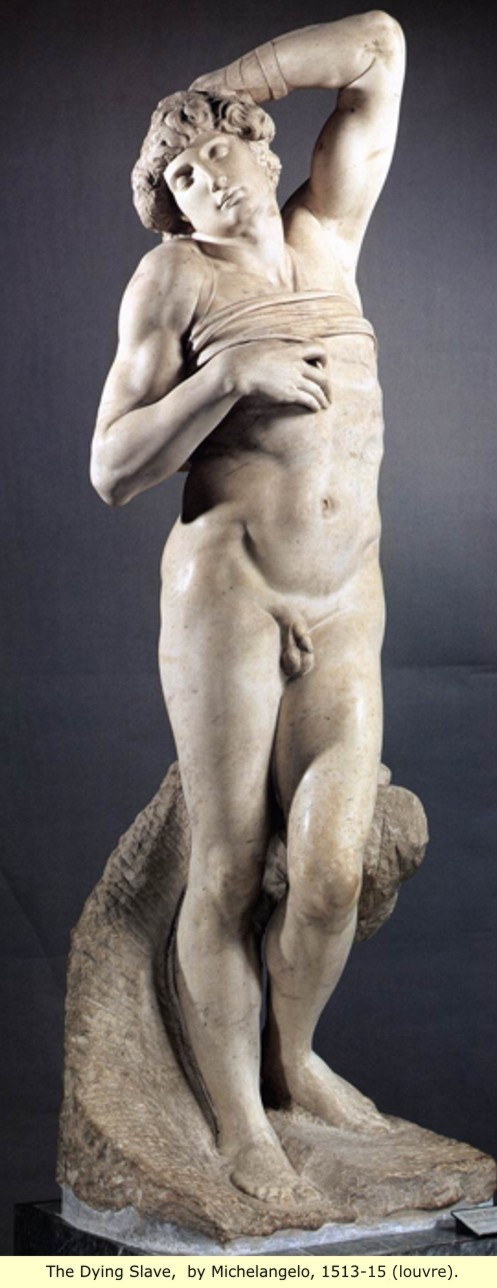
Wiki: The Dying Slave is a sculpture by the Italian Renaissance artist Michelangelo. Created between 1513 and 1515, it was to serve with another figure, the Rebellious Slave, at the tomb of Pope Julius II. It is a marble figure 2.15 metres (7' 4") in height, and is held at the Louvre, Paris. |
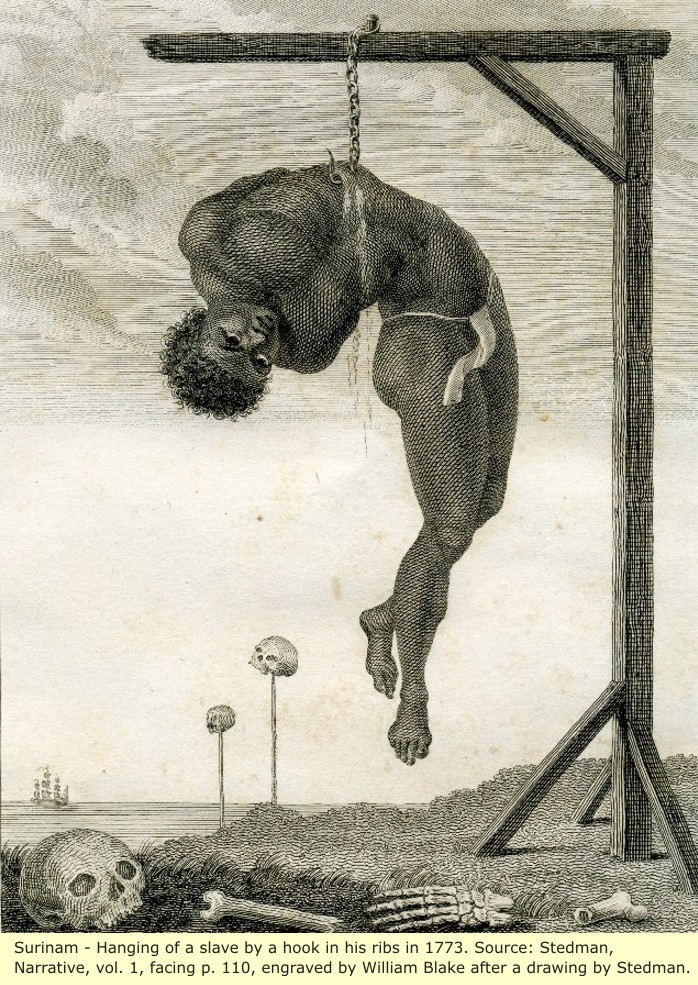
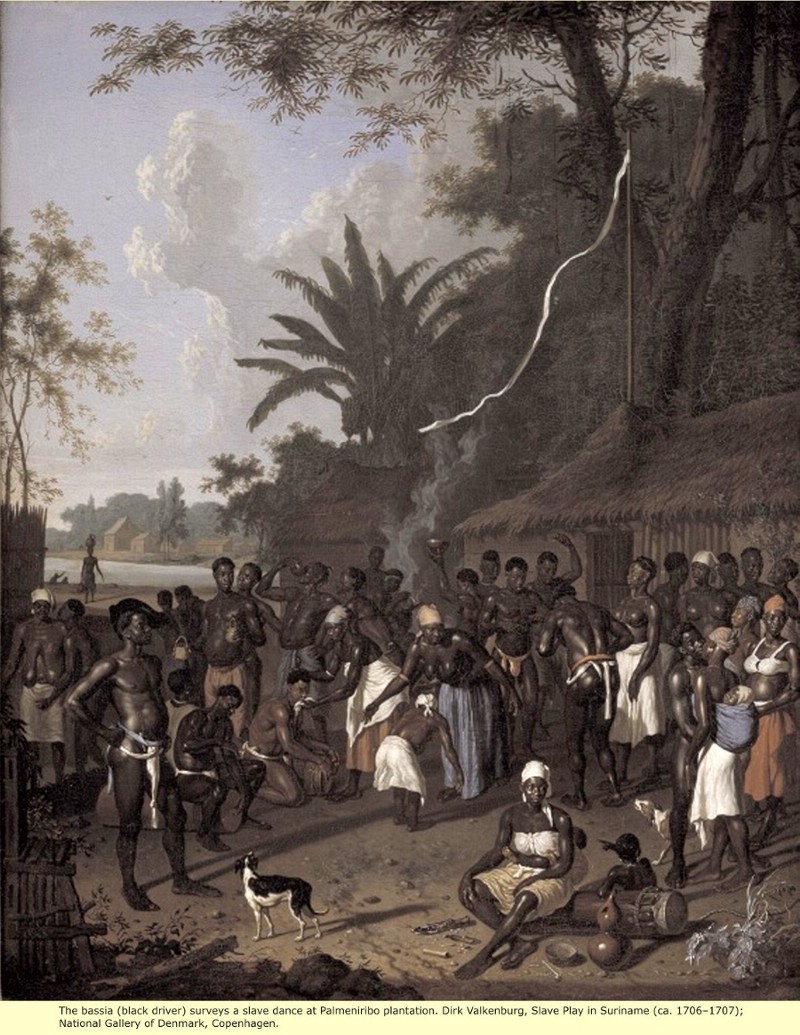
The Dutch captured the British colony of Suriname (formerly Dutch Guiana) during the Second Anglo-Dutch War(1667), and under the WIC it was developed as a plantation slave society. It was a primary destination for the Dutch slave trade, yet unusually it never experienced a general slave rebellion. The regime was one of extreme and deliberate brutality, even by the standards of the time. Mortality was so high that although 300,000 slaves were imported between 1668 and 1823, the ravaged population was never able to grow beyond a figure of 50,000. 'Maroonage' emerged as the main method of resistence.
 |
 |
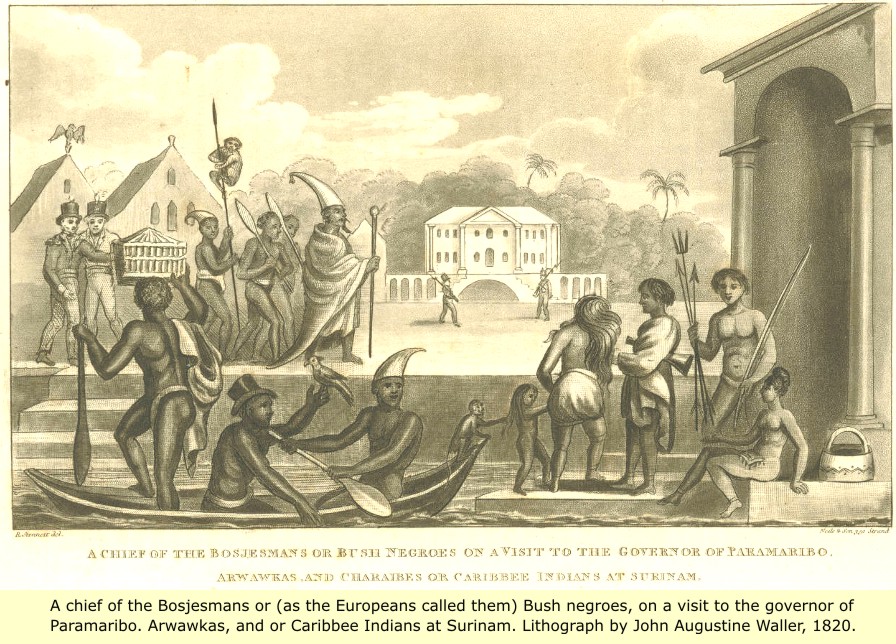
As most of the land was given to the production of sugar cane, The Dutch relied on African slaves. As the country is mostly rain forest, escape was not difficult. Many Africans escaped virtually off the boat. With the help of the Black native populations they were able to create their own villages and form independent ‘tribes’. Among the various tribes in Suriname are the Saramaka, Paramaka, Ndyuka, Kwinti, Aluka and Matawai (ethnicity unclear). These ‘Maroons’ as they were called by the Spanish, raided plantations, freed more slaves, and killed many planters.
Please note below - the word "Maroon": as usual the Albinos use words, titles, and identifiers in whatever way that suits THEM! Point being that it is highly unlikely that Maroons were actually "Escaped Slaves". Too many European languages use the same term in spite of the fact that they were all competitors. Logic suggests that it is a local Indian term, not a European term for escaped slaves.
 |
 |
|
|
 |
 |
 |
Unable to militarily defeat them, the Dutch formed treaties which gave the Maroons sovereign status over the land they occupied and various trading rights. In 1760 the Treaty of Ouca guaranteed the autonomy of these Maroons. They were the first peoples of the Americas to gain independence from colonial control. Slavery was officially abolished in 1863 but it wasn’t until 1873 the slaves were released after a ten year transition period. As soon as they gained their freedom, the ex-slaves left the plantation for the city of Paramaribo. The various tribes continue to live in Suriname as they have for hundreds of years.
The Scottish-Dutch soldier John Gabriel Stedman witnessed the oppression of the slaves during a campaign against the maroons in 1774. His book a Narrative of a Five Years Expedition Against the Revolted Negroes of Surinam, with vivid illustrations by William Blake and Francesco Bartolozzi was taken to heart by abolitionists.
 |
Click here for a Blow-up of this image:>>>
 |
The large indigenous Black population of the Americas was destroyed by murder and disease due to overwork and malnutrition (Not European disease) just like the Amerindian population. However, whereas Blacks were originally the most numerous people in the Americas, today their population is inferior to that of the Mongol extract native Americans. Some thoughts on why that is, are explored here:
An interesting comparison of White accounts of the Aztec and Inca wars. Click Here >>> |
Casta PaintingsCasta is an Iberian word (existing in Spanish, Portuguese and other Iberian languages since the Middle Ages), meaning lineage, breed, or race, to describe as a whole, the mixed-race people which appeared in the post-Conquest period. The social composition of Mexico during the eighteenth century was based on the existence of various castas or castes. Click here for examples of Casta Paintings >>> |
The American GenocideHere are some interesting numbers.At the time of Columbus’s landing in the America’s in 1492, the population of the Hemisphere was approximately 100 million people. Six million (6) in the Caribbean, ten million (10) in the United States and Canada, forty million (40) in Mexico and Central America, forty four (44) million in South America. By 1650 the Indian population of the Caribbean, Mexico-Central America and South America, was approximately fifteen (15) million people total. Today the Amerindian population of the Caribbean is all but extinct. By 1906 the Indian population of the United States and Canada was only one (1) million people. Systematic killings for their land and goods, being killed through the overwork and malnutrition of Slavery, and the use of disease as a biological weapon, where indigenous Americans were purposefully infected with Smallpox and other such diseases, (the Albinos would give the Blankets and clothing of Europeans killed by diseases like Smallpox and Measles to impoverished indigenous Americans, whose immune systems were already weak because of overwork and malnutrition): these methods killed almost nine (9) of every ten (10) people. However, the story later generations of American Albinos tell to cover up the atrocities committed in the Americas, is just plain stupid. That is the ridiculous assertion that indigenous Americans were wiped-out by "European Diseases" that they had no immunity for. And it is a testament to Albino collusion that never has any Albino medical professional come forward and said the truth: initially NO ONE has immunity from a disease. Immunity is developed only AFTER you have gotten, and SURVIVED, a particular disease. Thus, ANYONE from ANYWHERE, if they have not had Measles or a Measles vaccine, they WILL get sick if exposed to the Measles virus - Ditto Smallpox and all other diseases. And just as these diseases killed SOME EUROPEANS, they would of course also kill SOME indigenous Americans, OR Africans, OR Australians, OR Asians, OR Pacificans, OR MARTIANS! But since those diseases did not kill off 80-90% of the European population, or 80-90% of the African population, or 80-90% of the Australian population, or 80-90% of the the Asian population, or 80-90% of the Pacifican population: We can confidently conclude that the claim that those diseases killed off 80-90% of the indigenous American population is a vile Albino lie, contrived to cover up the brutal murder of millions of people.
And oh, by the way, as it turns out, Blacks have the LEAST susceptibility to disease of all Humans.So clearly, the diseases killed the original Americans story, was just one of many Albino lies!
|
 |
 |
 |
 |
 |
 |
 |
Brazil was the last country in the Western world to abolish slavery. By the time it was abolished, in 1888, an estimated four million slaves had been imported from Africa to Brazil, 40% of the total number of slaves brought to the Americas.
{Like all Albino/near-White mulatto dominated countries, Brazil is very careful with what kind of population statistics it publishes. Thus it is not possible to determine what portion of Brazils Black population is African, and what portion is Native American. Of course like all Albino/near-White mulatto dominated countries, Brazil teaches all Blacks that they are the descendants of African Slaves}.
Albino/near-White mulatto Brazilians make up 49.73% of Brazil's population, or around 91 million people, according to the 2010 Census. Brazil has the third largest white (European-descended) population in the world, after the United States and Russia.
But Brazil also has the largest black population outside Africa. It is estimated that about half of the country’s population is of African ancestry, and yet, Blacks are almost totally absent from positions of power.
An important factor about whiteness in Brazil is the racial stigma of being Amerindian or black, which is undesirable and avoided for a large part of the population. Scientific racism largely influenced race relations in Brazil since the late 19th century. The predominant nonwhite, mostly Afro-Brazilian population was seen as a problem for Brazil in the eyes of the predominantly White elite of the country. In Brazil, miscegenation was always legal, what was expected was that miscegenation would eventually turn all Brazilians into Whites.
As a result of that desire of whitening its own population, the Brazilian ruling classes encouraged the arrival of massive European immigration to the country. In just the 1890s alone, 1.2 million European immigrants were added to the country's 5 million whites.
However, Blacks and Asians were excluded.
Text of a decree-law 1945, repealed only in the 1980s:
Section 1 - Any foreigner may enter Brazil if it satisfies the conditions laid down by the law. Article 2 - Attending will, on admission of immigrants, the need to preserve and develop the ethnic composition of the population, the most convenient features of their European ancestry, as well as the defense of the national worker."
Even though expectations of the Brazilian elite to whiten its own population through European immigration eventually came to an end, the whitening ideology still influences racial relations in Brazil today. In general, the population still expects that blacks must biologically whiten themselves by marriage with lighter skinned people, or culturally through the assimilation of the traditions of the dominant white population.
| Harold George "Harry" Belafonte, Jr. (born March 1, 1927) is an American singer, songwriter, actor and social activist. He was dubbed the "King of Calypso" for popularizing the Caribbean musical style with an international audience in the 1950s. Born Harold George Bellanfanti, Jr. at Lying-in Hospital in Harlem, New York: Belafonte was the son of Melvine (née Love) – a housekeeper of Jamaican descent – and Harold George Bellanfanti, Sr., a Martiniquan. |
 |
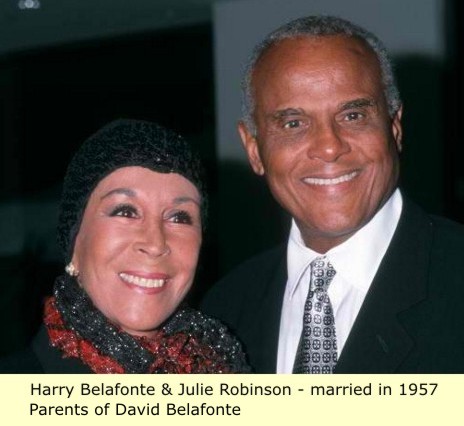 |
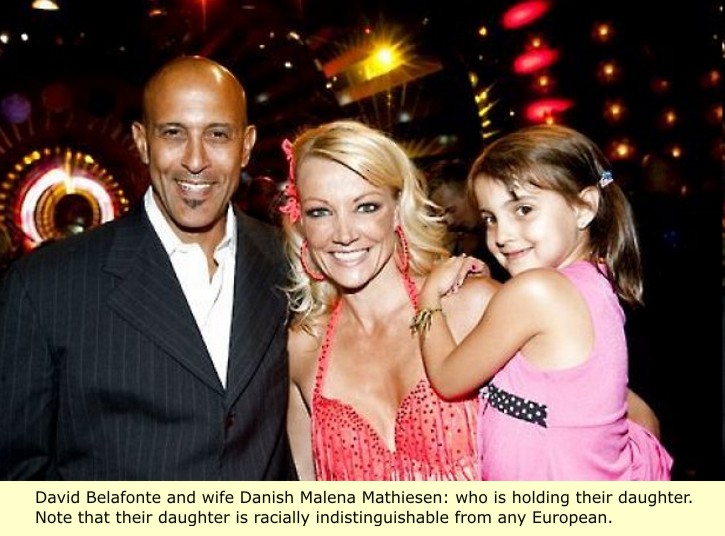 |
 |
 |
Death to undesirables: Brazil's murder capital: Killing squads are hiring police officers to 'cleanse' a city of petty criminals, reports Evan Williams from Recife. "It's a perverse kind of killing," said Mr Machado. "I call it social cleansing because the people being killed are normally black, they're poor and they're from the slums that surround the city. They have become what I call 'the killables'."
 |
Earlier we had deplored certain "unseemly" behaviors by some White scientist, researchers and academic's. One reason - other than the obvious - is because those behaviors tend to obscure science. A perfect example is with Huayna Cápac, we had earlier established that Caucasians were probably one part of the "Clovis" migration across the Bering straits. This theory was further strengthened by the discovery of Scythian mummies in Mongolia. What all this means, is that it is entirely possible that some members of the Inca nation, could have been Albinos. But because of those unseemly behaviors, we can't be sure if this 500 year-old description of Huayna Cápac is accurate, or just an embellishment by some poor misguided Albino person, with unhealthy racial issues.
The depictions of Caucasian looking Amerindians by early 19th century painters, only adds to the mystery. We know that Whites often demonstrate a kind of psychosis when dealing with historical fact. Their need and desire to be included in everything, everywhere, has often led them to fabricate artifacts, which depict White people in places and at times that they did not exist. This psychotic need to show themselves as all of the worlds great people, has led them to depict themselves as everything from Jesus Christ to Attila the Hun. An excellent example is the French-Brazilian painter Antoine Hercule Romuald Florence (1804–1879) known as Hercule Florence. This man seemed to have a psychotic need to depict all people with Albino features and coloring.
Update: The above was written many years ago when data was still scarce. Today we know that original Americans did NOT come across the Bering Straits; and the obvious Caucasian look of North American Indians is due simply to the fact that they are the Mulattoes of Black and Mongol Native Americans and Albino “Frontiersmen”.
That fact gives us a clue as to how different real history is from the lies of Albinos. Consider the situation where an Albino invader can venture out into the American hinterland “ALONE”. He can pick out a plot of land he likes, clear it, farm it, and then when he gets lonely, he can take a Native American Wife. Forget the lies of Albinos, for the most part they were welcomed by Native Americans, and it was that trust that allowed Albinos to Murder Native Americans wholesale. And by the time Native Americans understood what degenerate Thieves and Murderers Albinos were, it was too late for them to save themselves. Estimates are that Hemisphere-wide, 80-90 million were killed. See results of a new study refuting the "Clovis" theory at the bottom of this linked page. Click here: >>
 |
 |
 |
 |
 |
The White looking Kaingang Indians (spelled caingangue in Portuguese) as "supposedly" painted by Defret or Rugendas |
 |
 |
Young Uyghur Boy The Uyghur people are a Turkic ethnic group living in Eastern and Central Asia. They are the last White tribe remaining in the White mans ancestral home. Today Uyghurs live primarily in the Xinjiang Uyghur Autonomous Region in the People's Republic of China. An estimated 80% of Xinjiang's Uyghurs live in the southwestern portion of the region, the Tarim Basin - famous for the ancient White Tarim mummies. Today few Uyghurs are pure White, due to admixture with Mongols. |
 |
 |
|
Modern Kaingang Indian girl with White and Mongol features. |
Young Uyghur woman with White and Mongol features. |
 |
Typical Amerindian girls with Mongol features. |
 |
According to the Wiki "Afro-Brazilian:"
Brazilians rarely use the American-style phrase "African Brazilian" to categorize themselves, and never in informal discourse: the IBGE's July 1998 PME shows that, of Black Brazilians, only about 10% consider themselves of "African origin"; most of them identify as having a "Brazilian origin". In the July 1998 PME, the categories "Afro-Brasileiro" (Afro-Brazilian) and "Africano Brasileiro" (African Brazilian) weren't used even once; the category "Africano" (African) was used by 0.004% of the respondents. In the 1976 PNAD, none of these were used even once.
Some may think that sentiment is because Black Brazilians want to distance themselves from the perceived backwardness of Africa. But perhaps they know their actual history better than everyone else. We are told that Black Brazilians are due to four million African Slaves being imported over several hundred years. But who told us that? Well it was the same Albino People who told us all the other Historical lies. We know for sure that the Americas had very large populations of PaleoAmericans (Black Americans), they were in fact the Original settlers of the Americas, and everywhere else too. So is it such a stretch to believe that the Albinos also lied about how many Africans were imported into Brazil?
Ferdinand Magellan (1480 - 27 April 1521) was a Portuguese explorer who organized the Spanish expedition to the East Indies from 1519 to 1522, resulting in the first circumnavigation of the Earth, which was completed by Juan Sebastián Elcano after Magellan's death in 1521. Magellan was selected by King Charles I of Spain to search for a westward route to the Maluku Islands (the "Spice Islands"). Commanding a fleet of five vessels, he headed south through the Atlantic Ocean to Patagonia, passing through the Strait of Magellan into a body of water he named the "peaceful sea" (the modern Pacific Ocean). Magellan did not complete the entire voyage, as he was killed during the Battle of Mactan in the Philippines in 1521. Magellan was succeeded by Juan Sebastián Elcano as commander of the expedition.
 |
 |
After we had passed the equinoctial line going south, we lost the north star, and hence we sailed south south-west until [we reached] a land called the land of Verzin which lies in 23.54 degrees of the Antarctic Pole. It is the land extending from the cape of Santo Augustino, which lies in 8 degrees of the same pole. {Cabo de Santo Agostinho (Cape of Saint Augustine) is 35 km south of the city of Recife, state of Pernambuco, Brazil, the most easterly (closest to Africa) point of Brazil}. That land of Verzin is wealthier and larger than Spagnia, Fransa, and Italia put together, and belongs to the king of Portugalo. The people of that land are not Christians, and have no manner of worship. They live according to the dictates of nature, and reach an age of one hundred and twenty-five and one hundred and forty years. They go naked, both men and women. They live in certain long houses which they call boii and sleep in cotton hammocks called amache, which are fastened in those houses by each end to large beams. A fire is built on the ground under those hammocks. In each one of those boii, there are one hundred men with their wives and children, and they make a great racket. They have boats called canoes made of one single huge tree, hollowed out by the use of stone hatchets. Those people employ stones as we do iron, as they have no iron. Thirty or forty men occupy one of those boats. They paddle with blades like the shovels of a furnace, and thus, black, naked, and shaven, they resemble, when paddling, the inhabitants of the Stygian marsh. Men and women are as well-proportioned as we. They eat the human flesh of their enemies, not because it is good, but because it is a certain established custom.
 |
Jean-Baptiste Debret (April 18, 1768 – June 28, 1848) was a French painter. He traveled to Brazil in March 1816 as a member of the so-called French Artistic Mission, a group of bonapartist French artists and artisans bound to creating in Rio de Janeiro an arts and crafts lyceum (Escola Real de Artes e Ofícios) under the auspices of King D. João VI and the Conde da Barca, which later became the Academia Imperial de Belas-Artes (Imperial Academy of Fine Arts) under Emperor Dom Pedro I. He established his atelier at the Imperial Academy in December 1822 and became a valued teacher in 1826.
He corresponded frequently with his brother in Paris. Noticing his brother's interest in his depiction of everyday life in Brazil, he started to sketch street scenes, local costumes and relations of the Brazilians in the period between 1816 and 1831. He took a particular interest in slavery of blacks, and in the indigenous peoples of Brazil. Together with the German painter Johann Moritz Rugendas (1802-1858) (in Brazil 1821 - 1825), his work is one of the most important graphic documentation of life in Brazil during the early decades of the 19th century.
 |
 |
 |
 |
| Wikipedia cited this book for the bogus picture above. Kelsey, H. (1993). Mission San Juan Capistrano: A Pocket History. Interdisciplinary Research, Inc. Altadena, CA. p. 5 |
 |
The Mbayá or Mbyá are an ethnic group, commonly called "Indians", which formerly ranged on both sides of the Paraguay River, on the north and northwestern Paraguay frontier, eastern Bolivia, and in the adjacent province of Mato Grosso do Sul, Brazil. They have also been called Caduveo. In the 16th century the Mbayá were called Guaycuru, a name later used generically for all the nomadic and semi-nomadic Indians of the Gran Chaco. The Kadiwéu people of Brazil are the surviving branch of the Mbayá.
The Mbayá called themselves the Eyiguayegis, the people of the palm, a reference to the abundant palm trees in their home country. The Mbayá spoke a Guaycuruan language. They were "formidable" fighters and "kept the Europeans -- settlers and priests alike -- at bay" for more than 300 years.
The Mbayá were nomads. With horses captured from the Spanish, the Mbayá developed an equestrian culture by about 1600 and were a serious threat to Spanish and Portuguese settlers, missionaries, and governments in Paraguay, Bolivia, and Brazil until near the late 19th century. They also raided and subjugated other Indian groups, notably the Guana. They were generally friendly with the Payaguá, who lived along the Paraguay River and had a riverine culture.
 |
 |
 |
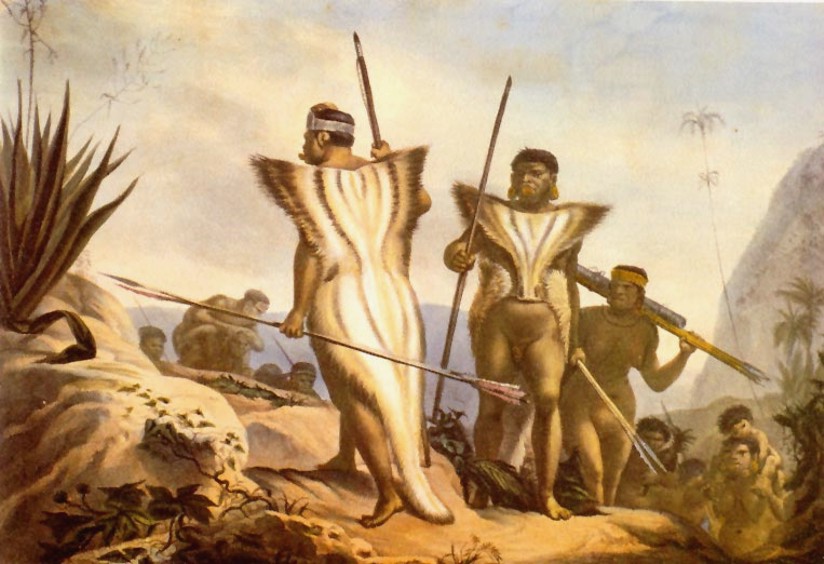 |
 |
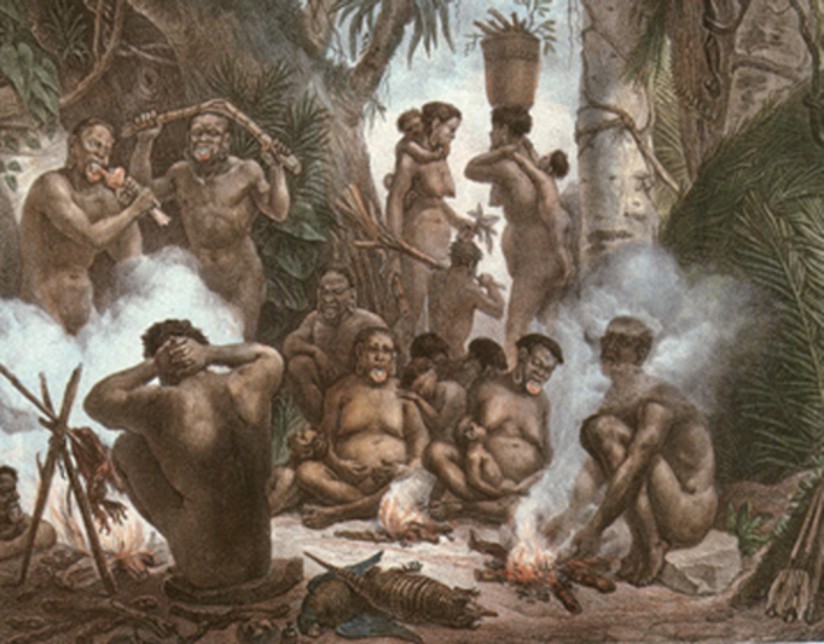 |
From the picture above: Apparently the rather gross custom of Lip Plating is very ancient, and far ranging. It is not known if the Amerindian developed this custom independently in Asia, or if they learned it from the Africans/Australians/Polynesians they found in the Americas when they arrived there.
| Note: Polynesian is a term that the Albino people have applied to Pacificans/Austronesians who have significant "White Mongol/European" admixture. They reserve the term Melanesian for the original "Pure Black" Pacificans/Austronesians who have resisted admixture. |
 |
 |
Modern African with Lip Plate |
Modern Amerindian with Lip Plate |
 |
 |
 |
 |
 |
 |
 |
 |
 |
 |
 |
 |
 |
 |
 |
 |
 |
 |
 |
 |
 |
 |
 |
of our Presentation, we hope you enjoyed it.
Please visit the "Additional Material Area" for many more photographs of each civilization, and related material <Click> |
| < Back | Home | Next > |


